How to Choose the Right TPU TPV Hoses for Your Applications?
Choosing the right TPU TPV hoses for your applications can be challenging. Industry expert John Smith once said, “The right hose can make or break your project.” This statement highlights the importance of selection in achieving optimal results.
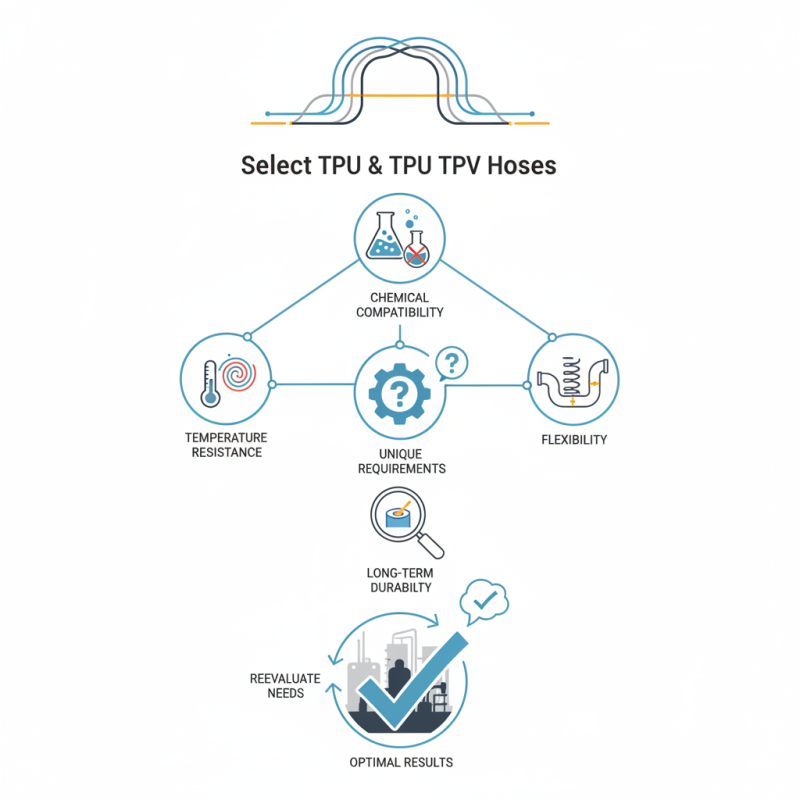
TPU TPV hoses are versatile and suitable for various industries, from automotive to food processing. When selecting hoses, consider factors such as temperature resistance, chemical compatibility, and flexibility. Each application has unique requirements that can impact performance.
However, finding the perfect fit is not always straightforward. Sometimes, the specifications seem overwhelming. Many users overlook subtle details that could affect long-term durability. It is crucial to reevaluate the needs before making a decision. This ensures that the chosen TPU TPV hoses meet the demands of your specific project effectively.
Understanding TPU and TPV: Key Properties and Differences
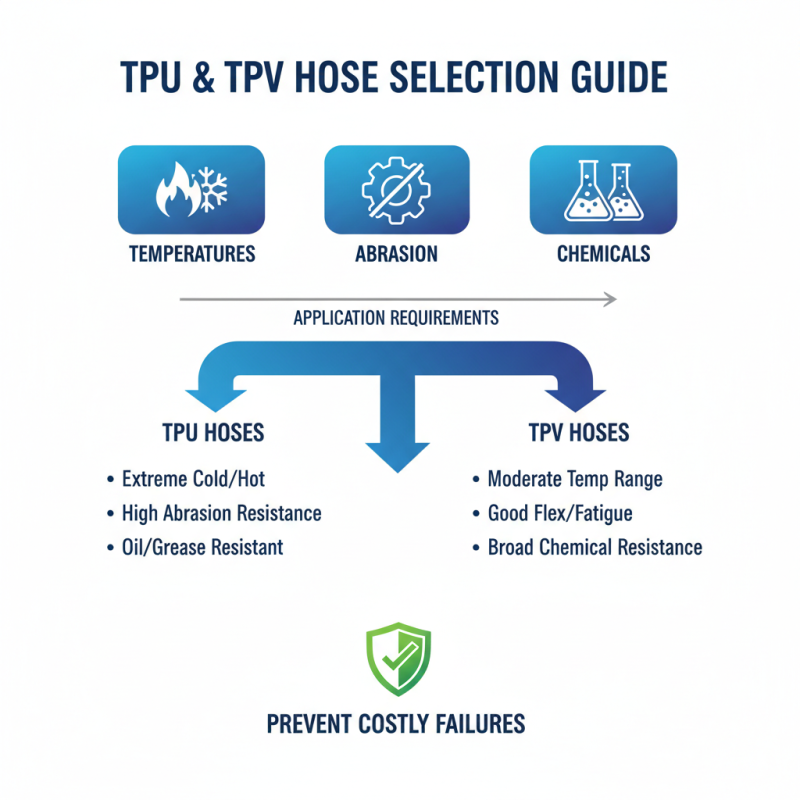
When selecting TPU (Thermoplastic Polyurethane) and TPV (Thermoplastic Vulcanizate) hoses for your applications, understanding their properties is essential. TPU is known for its excellent abrasion resistance and flexibility. These characteristics make it suitable for demanding environments. In contrast, TPV boasts enhanced chemical resistance and greater thermal stability. A recent industry report highlights that TPU hoses can sustain operational temperatures of up to 80°C, while TPV hoses can handle temperatures typically up to 120°C.
Both materials present unique advantages. TPU is often lighter and offers superior elongation properties. This allows for more dynamic applications. Yet, its susceptibility to certain chemicals might raise concerns in specific environments. On the other hand, TPV is often more durable in harsh chemical situations. Its properties make it ideal for automotive and industrial uses. However, TPV can be less flexible than TPU, which may not suit every scenario.
The ideal choice between TPU and TPV hoses largely depends on application requirements. Factors like operating temperature, chemical exposure, and physical stresses should guide your decision. Neglecting these details could lead to premature failure or reduced efficiency. Understanding these nuances is key to selecting the best hose for your needs.
Identifying Application Requirements for TPU TPV Hoses
When selecting TPU TPV hoses, understanding application requirements is crucial. Consider the environment where the hoses will be used. Will they face extreme temperatures? High abrasion? Chemical exposure? Each condition necessitates specific properties in the hose material. Assessing these factors can prevent costly failures.
It’s also essential to evaluate the flexibility needed in your application. Some tasks require tight bends, while others may need a straight, rigid structure. Dimensions matter too. The internal diameter must align with your system’s needs for optimal functionality. Carefully measuring and predicting flow rates can save you from future headaches.
Lastly, think about installation and maintenance. User-friendly hoses can simplify your workflow. However, remember that not every hose will meet all your needs perfectly. Some may fail performance tests in unexpected ways. Regular assessments may help identify these shortcomings. Reflect on your choices periodically to make necessary adjustments.
Evaluating Performance Metrics: Abrasion Resistance and Flexibility
When selecting TPU (Thermoplastic Polyurethane) and TPV (Thermoplastic Vulcanizates) hoses, two key performance metrics stand out: abrasion resistance and flexibility. A comprehensive analysis of performance characteristics reveals that TPU hoses can exhibit abrasion resistance ratings up to 300% better than traditional materials. In rugged environments, this durability proves advantageous for extending hose life and reducing downtime.
Flexibility is another critical factor. TPU hoses often maintain flexibility even at low temperatures, with performance metrics showing a retention of flexibility at -40°C. This quality enhances operational efficiency in cold weather. However, not all TPU hoses are created equal. Some lower-grade options may lose flexibility over time, particularly when exposed to harsh chemicals or extreme temperatures.
Tips: Always check the specific flexibility rating on the technical datasheet. It's essential. Consider environmental factors affecting the hose during operation. Abrasion can be deceptive; surface damage may not always be immediately visible but can lead to failure. Regular inspections are necessary to maintain performance.
How to Choose the Right TPU TPV Hoses for Your Applications? - Evaluating Performance Metrics: Abrasion Resistance and Flexibility
| Hose Type |
Abrasion Resistance (mg) |
Flexibility Rating (Degrees) |
Operating Temperature Range (°C) |
Application Suitability |
| TPU Standard Hose |
100 |
45 |
-30 to 80 |
General Applications |
| TPV Heavy-Duty Hose |
80 |
30 |
-40 to 90 |
Industrial Applications |
| TPU Flexible Hose |
120 |
60 |
-20 to 70 |
Automotive Applications |
| TPV Chemical Resistant Hose |
90 |
40 |
-30 to 85 |
Chemical Processing |
Selecting the Right Hose Specifications: Diameter, Length, and Temperature
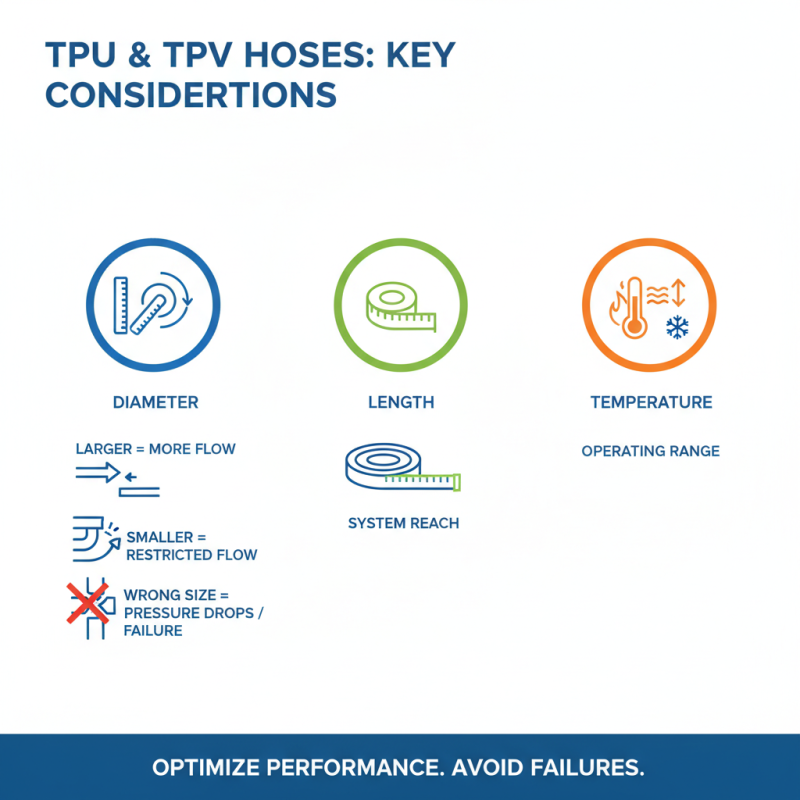
When selecting TPU TPV hoses, diameter, length, and temperature are crucial. The hose diameter determines the flow rate. A larger diameter allows more fluid to pass through. Conversely, a smaller diameter restricts flow. If you misuse the diameter, it can lead to pressure drops or system failures.
Length is another key specification. Longer hoses can create more resistance. This can impact the efficiency of your system. Ensure the length is optimal for your setup. Keep in mind that excess length may require more support or could lead to kinks.
**Tips:** Measure your space accurately. Think about the distance it needs to cover. Also, consider bends and turns. Each adds complexity. Temperature is vital too. Ensure your hose can handle the working temperatures without issues. Regular assessments are needed to avoid unforeseen breakdowns. A hose that doesn’t suit the temperature can degrade quickly. Pay attention to these details to ensure longevity.
Analyzing Cost-Effectiveness and Durability in Hose Selection
When selecting TPU or TPV hoses for various applications, cost-effectiveness and durability are paramount. TPU hoses often exhibit tensile strengths of up to 7000 psi, making them suitable for high-pressure uses. Conversely, TPV hoses provide excellent chemical resistance and can endure UV exposure, but might not withstand extreme temperatures as well as TPU. Understanding these differences helps in making informed choices for specific needs.
Tip: Evaluate the operating environment. If your application involves harsh chemicals or UV exposure, TPV may be a better option. For high-pressure systems, lean towards TPU for superior strength.
Durability also hinges on material quality. Research indicates that low-grade hoses deteriorate faster, leading to replacements within a year, while higher-quality options can last over five years. The upfront cost of quality hoses might seem high, but they offer better long-term savings.
Tip: Consider lifecycle costs rather than just initial expenses. Sometimes, spending more upfront leads to fewer replacements and maintenance costs.
Analyze specific performance metrics that are crucial to your application. While all hoses deteriorate over time, understanding the specific stressors they face can guide you in selecting the right material. Take time to reflect on both the application and environmental demands for the best choice.