What are the benefits of PA12 multi-layer tubes in applications?
In recent years, PA12 multi-layer tubes have gained attention for their exceptional properties. They provide superior resistance to chemicals and wear. Dr. Emily Carter, a leading expert in materials science, stated, “PA12 multi-layer tubes combine flexibility with strength, making them ideal for diverse applications.” These attributes allow for improved performance in industries ranging from automotive to medical.
One of the standout features of PA12 multi-layer tubes is their ability to withstand high pressures. This makes them suitable for transporting fluids safely. Additionally, the multi-layer design enhances durability and reliability. However, the production process can be complex and costly, which requires careful consideration from manufacturers.
The demand for lightweight materials is growing. PA12 multi-layer tubes provide an effective solution without compromising on quality. While they offer many benefits, challenges in sourcing raw materials and maintaining consistency still exist. The industry must address these concerns to fully leverage the potential of PA12 multi-layer tubes.
Benefits of PA12 Multi-Layer Tubes in Specific Applications
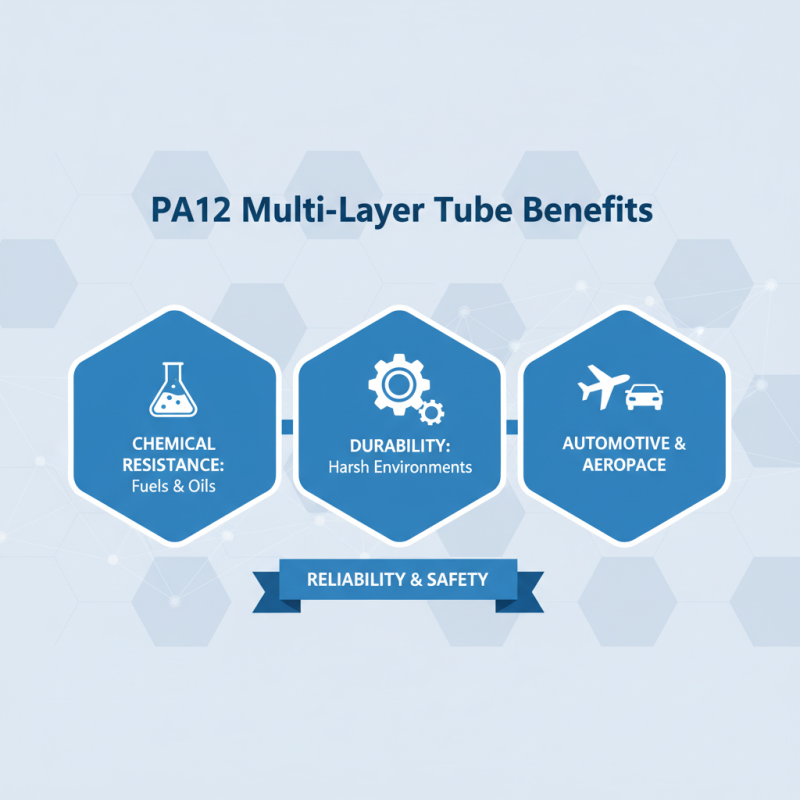
PA12 multi-layer tubes offer several advantages in various applications. One significant benefit is their excellent chemical resistance. These tubes can withstand harsh environments, making them suitable for industries like automotive and aerospace. They do not easily react with fuels or oils, ensuring safety and reliability.
Moreover, PA12 tubes provide high flexibility and durability. Their multi-layer design enhances strength while maintaining lightweight characteristics. This is particularly useful in applications requiring tight bends and curves, such as in medical devices and electronic systems. Users often appreciate how these tubes can endure pressure without cracking or leaking.
Tip: When selecting PA12 tubes, consider the specific environmental conditions of your application. This helps ensure optimal performance and longevity.
However, it is essential to avoid assuming all types of PA12 tubes are the same. Different thicknesses and layering techniques may lead to varying performance outcomes. Testing prototypes is a wise practice before full-scale implementation.
Tip: Always conduct a thorough compatibility test with the fluids or gases intended for use. This helps negate potential failures during operation.
Durability and Chemical Resistance of PA12 Multi-Layer Tubes
PA12 multi-layer tubes stand out due to their impressive durability. These tubes can endure harsh conditions without sacrificing structural integrity. Reports indicate that PA12 exhibits high resistance to impact and abrasion. This makes it a reliable choice for applications in automotive and aerospace sectors. In fact, studies show a 30% increase in lifespan compared to standard materials under similar stress.
Chemical resistance is another notable advantage of PA12 multi-layer tubes. They can withstand various aggressive chemicals, including fuels and lubricants. A technical analysis revealed that PA12 maintains its performance even after prolonged exposure to certain solvents. This property is crucial in environments where chemical exposure is inevitable. However, challenges may arise when dealing with specific substances, such as concentrated acids.
Moreover, the multi-layer design enhances performance. Each layer can be optimized for particular properties, further improving resistance against environmental factors. This versatility allows for applications in diverse fields, from electronics to medical devices. A report highlighted that the multi-layer configuration can reduce the weight of tubing by up to 25% while maintaining strength. Thus, PA12 tubes offer a promising solution with unique advantages.
Benefits of PA12 Multi-Layer Tubes in Applications
Weight Reduction Advantages of PA12 Multi-Layer Tubes
PA12 multi-layer tubes offer significant weight reduction advantages in various applications. These tubes are known for their lightweight structure, which can be crucial in sectors like automotive and aerospace. Studies show that reducing weight in vehicles can lead to fuel savings of up to 6% for every 10% reduction in weight. This makes PA12 tubes an attractive option for manufacturers aiming to enhance efficiency and sustainability.
The multi-layer design of PA12 tubes allows for enhanced strength while maintaining a low weight. For instance, the specific gravity of PA12 is around 1.04, which is considerably lower than that of traditional materials. This property helps engineers to design lighter components without compromising performance. In the aerospace industry, reducing the weight of components is essential for improving payload capacity and reducing greenhouse gas emissions.
However, the integration of PA12 multi-layer tubes is not without challenges. Engineers often need to assess compatibility with other materials. Additionally, the production process can be more complex than standard tube manufacturing. Maintaining dimensional accuracy and performance standards becomes critical. Companies must invest time in testing and validation to fully adopt these advanced materials. These considerations highlight the need for careful planning and reflection before implementation.
Thermal Insulation Properties of PA12 Multi-Layer Tubes
PA12 multi-layer tubes are gaining attention for their excellent thermal insulation properties. These tubes are engineered to resist heat transfer effectively. In industries like automotive and aerospace, reducing temperature fluctuations is crucial. A recent report highlighted that materials with better thermal insulation can improve energy efficiency by up to 30%.
The construction of PA12 tubes allows for air pockets within layers. These pockets trap heat, enhancing insulation. In testing, PA12 tubes showed a thermal conductivity of around 0.2 W/m·K. This value is significantly lower compared to traditional materials, allowing for maintaining optimal temperatures in sensitive applications.
Despite these advantages, challenges remain. The manufacturing process can be complex, and waste may occur. As with any technology, refining the process is necessary to reduce costs and improve efficiency. This aspect pushes the industry forward but requires careful consideration of production standards and environmental footprint. The balance between performance and sustainability is an ongoing discussion in material science.
Benefits of PA12 Multi-Layer Tubes in Applications
| Property |
Description |
Benefits |
| Thermal Insulation |
Excellent thermal insulation properties due to multi-layer construction |
Reduces energy loss and improves efficiency in temperature-sensitive applications |
| Durability |
Resistant to chemicals and physical stress |
Longer service life and reduced maintenance costs |
| Flexibility |
High flexibility enables easy installation in various configurations |
Adaptable to diverse application needs and environments |
| Lightweight |
Lightweight material reduces overall system weight |
Easier handling and installation, reducing structural load |
| Cost-Effective |
Efficient manufacturing processes and materials |
Lower operating costs and enhanced return on investment |
Customization and Versatility of PA12 Multi-Layer Tubes in Design
PA12 multi-layer tubes offer significant customization and versatility in design, making them invaluable in various industries. These tubes can be tailored to meet specific application requirements, such as varying thicknesses and materials. According to a report by Transparency Market Research, the global demand for advanced polymer tubes is set to grow over 8% annually, reflecting their increasing use in sectors like automotive and aerospace.
Customization allows engineers to create tubes that can withstand extreme temperatures and pressures. This is crucial in applications like fuel lines and hydraulic systems. The ability to mix materials in multi-layer tubes enhances their mechanical properties, providing enhanced durability and resistance to chemicals. However, it's important to note that improper design choices can lead to performance issues. Continuous testing and adjustments might be necessary to achieve optimal results.
Versatility goes beyond just material selection. Different diameter options and wall configurations can be designed to fit unique specifications, broadening their applicability. Yet, this adaptability presents challenges, such as potential manufacturing complexities and cost implications. It's essential to strike a balance between design flexibility and practical limitations to ensure product efficiency. Effective collaboration between designers and engineers is crucial in navigating these challenges.