Inquiry
Form loading...

Top 10 Types of Mexico Automotive Factories for Global Buyers

Mexico’s automotive sector is not one uniform production base. It is a network of specialized facilities serving passenger cars, trucks, electric vehicles, and components. For global buyers, understanding each facility type can prevent costly sourcing assumptions. This guide introduces the Top 10 Types of Mexico Automotive Factories for Global Buyers.

A Mexico automotive factory may focus on stamping, casting, machining, welding, painting, assembly, batteries, engines, transmissions, or aftermarket parts. Each model demands different equipment, labor skills, quality systems, and logistics planning. A stamping plant may run large presses beside carefully stored steel coils. An assembly facility may track thousands of parts through barcode scanners and torque-controlled tools. Battery operations require tighter process controls, specialized testing, and disciplined material handling. Location also changes the buying decision. Plants near Monterrey, Saltillo, Guanajuato, Puebla, or the northern border can offer different supplier access, labor conditions, and transport routes. Port connections matter for imported inputs and finished goods.

However, proximity alone does not prove capability. Buyers should verify production records, certifications, capacity data, maintenance practices, and delivery performance directly. That evidence matters. This article uses a practical, buyer-focused lens rather than relying on factory labels. It highlights strengths, limitations, and questions worth asking during audits. No factory is perfect, and published capacity can differ from real output. A careful review should examine sample parts, shift records, quality reports, and contingency plans. The categories may overlap, too. That is normal. Their value lies in making comparisons clearer before contracts, trials, and long-term partnerships begin.
Top 10 Types of Mexico Automotive Factories for Global Buyers

Mexico’s Automotive Manufacturing Landscape for Global Buyers

Mexico’s automotive manufacturing landscape serves global buyers through ten common factory types: vehicle assembly, stamping, casting, forging, machining, plastic molding, electronics, battery systems, interior components, and logistics operations. These facilities often cluster near major transport corridors, ports, and skilled labor markets. A supplier may offer strong export experience, but regional differences still matter. Road access, electricity stability, water availability, and customs procedures can affect delivery performance.

Plant audits often reveal more than brochures. Check production flow, traceability records, calibration routines, and worker training. Ask how the factory handles heat, dust, power interruptions, and urgent engineering changes. Quality certificates are useful, but they do not replace floor-level evidence. Review sample inspection reports and verify capacity during peak demand. Some factories look highly organized during scheduled visits. That impression can be incomplete.

Tips: Compare at least three factory types before choosing a supplier. Request a recent on-time delivery record. Confirm tooling ownership in writing. Test packaging with real transport conditions. Include bilingual technical documents where practical. A local audit partner may notice details that remote meetings miss. Do not assume a lower quote means lower risk; however, do not accept vague claims about reliability either. Ask for measurable evidence, then revisit the decision after pilot production.
Top 10 Types of Mexico Automotive Factories for Global Buyers

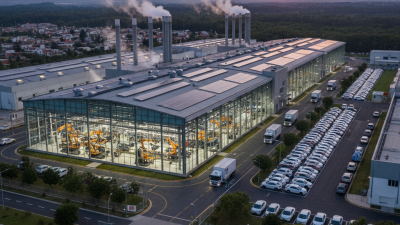
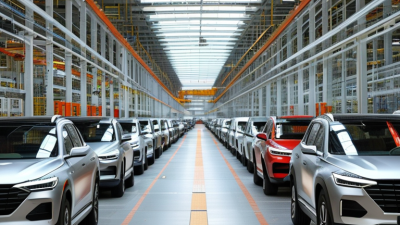
Mexico’s automotive manufacturing landscape is built around vehicle assembly, powertrain production, component manufacturing, and supporting industrial operations.

The chart ranks major factory types by their strategic importance to Mexico’s automotive supply chain, based on production scale, export relevance, supplier depth, and demand from global vehicle programs. Vehicle assembly and automotive component factories represent the broadest sourcing opportunities, while battery, electronics, and engineering facilities are becoming increasingly important as Mexico expands electrification and advanced vehicle manufacturing.

Source basis: Mexico’s automotive industry structure reported by INEGI, AMIA, INA, Secretaría de Economía, and publicly documented automotive manufacturing activities in Mexico. Scores are normalized industry-priority indicators rather than company-specific figures.

Vehicle Assembly Plants: Cars, Trucks, and Commercial Vehicles

Top 10 Types of Mexico Automotive Factories for Global Buyers

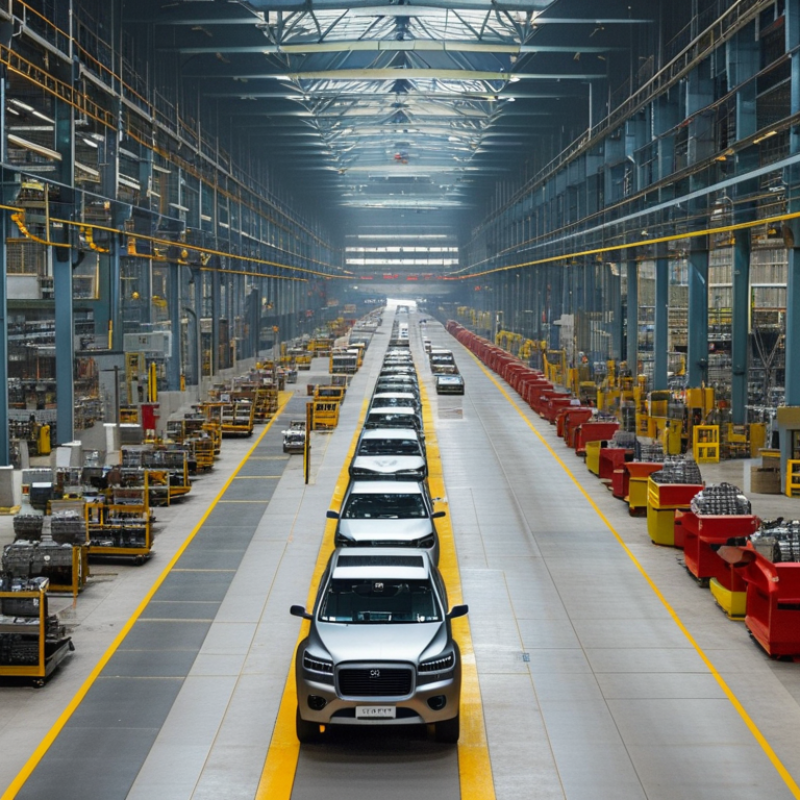
Vehicle assembly plants in Mexico produce passenger cars, pickup trucks, heavy trucks, buses, and specialized commercial vehicles. Each factory type serves different export, labor, and logistics requirements. Passenger vehicle plants often use highly automated body shops, controlled paint booths, and line-side parts delivery. Their layouts support consistent cycle times and strict inspection routines.

Truck and commercial vehicle plants usually require stronger frames, larger work areas, and flexible assembly stations. A chassis may arrive before the cab, while technicians install axles, wiring, braking systems, and power units in separate zones.

Commercial vehicle facilities can also support buses, delivery vans, emergency vehicles, or fleet-specific configurations. Buyers should examine loading capacity, road access, port connections, and supplier proximity before selecting a location.

Factory performance is not measured by output alone. It also depends on traceability, worker training, maintenance discipline, and quality response. Ask for production records, audit procedures, and evidence of compliance with applicable safety and environmental rules. Visit the plant if possible. The cleanest showroom cannot replace direct observation.

No plant is flawless. Delays happen. Some facilities may need stronger inventory controls or clearer communication with overseas buyers. That weakness should be discussed early, not hidden behind impressive machinery. A practical assessment should compare assembly flexibility, inspection depth, delivery reliability, and after-sales support.

Powertrain and Electric Vehicle Component Factories

Powertrain and Electric Vehicle Component Factories

Mexico’s powertrain factories support engines, transmissions, axles, and thermal systems for global vehicle programs. INEGI reported nearly 4.0 million light vehicles produced in Mexico during 2024. That scale creates strong demand for precision machining, casting, testing, and supplier integration.

EV production is expanding the factory map. The International Energy Agency reported global electric car sales above 17 million in 2024, representing more than one-fifth of new car sales. Mexican facilities increasingly manufacture battery enclosures, electric motors, inverters, charging modules, and cooling assemblies. Buyers should inspect cell-handling procedures, electrical safety controls, software validation, and end-of-line testing. Small details matter. A poorly sealed connector can stop an entire vehicle line.

The opportunity is real, but factory readiness is uneven. Some plants still adapt combustion-powertrain equipment for electrified components. That approach can reduce investment, yet it may limit automation and future capacity. The IEA also notes that battery supply chains remain concentrated, creating risks for sourcing and continuity. Global buyers should request audit records, process-capability data, traceability samples, and evidence of workforce training. Mexico’s logistics network is strong, but regional power reliability and specialized engineering talent require practical review. A factory may meet today’s purchase order and still struggle with tomorrow’s chemistry, voltage, or software requirements. That uncomfortable gap deserves attention.

Automotive Parts, Systems, and Tiered Supplier Facilities

Top 10 Types of Mexico Automotive Factories for Global Buyers

Mexico’s automotive network includes more than vehicle assembly plants. It also contains stamping, casting, machining, plastics, interiors, electronics, glass, battery, testing, and logistics facilities. These sites support Tier 1, Tier 2, and Tier 3 purchasing structures. According to Mexico’s National Auto Parts Industry Association, auto parts production reached an estimated US$113.8 billion in 2024. That scale creates useful supplier depth, but capability varies by region and process.

Tier 1 facilities usually deliver complete systems, such as braking modules, seats, dashboards, thermal systems, and electronic control units. Tier 2 factories produce precision components, including gears, connectors, forgings, and molded parts. Tier 3 suppliers often provide basic materials, fasteners, wire, and stamped blanks. Mexico’s statistics agency reported 3,989,403 light vehicles produced during 2024, supporting strong demand for synchronized local supply. Production volume matters. Process discipline matters more.

Global buyers should inspect tool rooms, calibration records, traceability software, and contingency inventories. A clean factory tour proves little. Ask for recent defect data and capacity evidence. I would also verify customs routes, energy stability, wastewater controls, and workforce training. Some supplier classifications look impressive on paper. They may need deeper validation. Small details matter: labeled bins, controlled gauges, and a documented reaction plan for a rejected batch.

Factory Selection Criteria for International Automotive Buyers

Top 10 Types of Mexico Automotive Factories for Global Buyers

Factory Selection Criteria for International Automotive Buyers

Mexico’s automotive supply base includes vehicle assembly plants, stamping facilities, casting shops, forging plants, and plastic molding factories. It also covers battery, electronic, glass, seating, and testing operations. Each type serves a different purchasing need. A buyer should match the factory’s process capability with the required material, tolerance, production volume, and delivery schedule.

Quality evidence matters more than polished presentations. Request process flow charts, control plans, inspection records, and sample traceability. Review relevant certifications, laboratory capacity, maintenance routines, and corrective-action history. Visit the production floor if possible. Look for labeled bins, calibrated gauges, clean tool storage, and operators who understand defect procedures. These details reveal operational discipline.

Capacity should be checked under realistic conditions. Ask about machine utilization, tooling ownership, backup equipment, labor turnover, and peak-season performance. Evaluate transport routes, border experience, packaging standards, and emergency communication. Local sourcing can reduce lead times, but it may also create hidden dependency risks. A single-source component deserves a backup plan.

Price alone is a weak filter. A low quote may exclude tooling changes, validation work, or special packaging. Buyers should compare total landed cost and measurable service levels. Factory audits are useful, yet they are not perfect. A well-prepared audit day can hide routine weaknesses. Require follow-up evidence after approval, and keep reassessing performance through delivery data, defect rates, and response times.

Top 10 Types of Mexico Automotive Factories for Global Buyers - Factory Selection Criteria for International Automotive Buyers

No. Factory Type Typical Products and Processes Common Mexican Production Regions Best Fit for Global Buyers Key Factory Selection Criteria Evidence to Request Before Approval
1 Complete Vehicle Assembly Factory Body assembly, paint, final assembly, end-of-line testing, vehicle sequencing and export preparation. Northern Mexico, the Bajío region and central Mexico. Finished-vehicle programs requiring high-volume production, regional supply continuity and export logistics. Annual capacity, model flexibility, launch experience, quality performance, labor availability, utility reliability and border or port access. Capacity plan, plant layout, launch timetable, quality records, production traceability, contingency plan and logistics route study.
2 Engine and Powertrain Factory Cylinder heads, engine blocks, crankshafts, fuel-system components, machining, assembly and functional testing. Bajío, northern border states and central Mexico. High-precision components for internal-combustion, hybrid and selected powertrain applications. Machining capability, dimensional control, metallurgical traceability, process capability, energy stability and testing capacity. Machine list, capability studies, calibration records, material certificates, sample inspection reports and process-control plans.
3 Transmission and Driveline Factory Gears, shafts, differentials, transmission assemblies, machining, heat treatment and performance testing. Central Mexico, the Bajío region and northern industrial corridors. Programs requiring tight tolerances, low noise and vibration, and repeatable mechanical performance. Gear measurement, heat-treatment control, cleanliness management, noise testing, traceability and engineering support. Equipment capability matrix, heat-treatment validation, measurement-system analysis, test specifications and nonconformance history.
4 Stamping and Metal Forming Factory Body panels, brackets, reinforcements and structural parts produced through stamping, laser cutting, bending and welding. Northern Mexico, Puebla corridor, central Mexico and the Bajío. Large metal parts, medium-volume components, tooling programs and lightweight vehicle structures. Press tonnage, material thickness range, die maintenance, dimensional accuracy, surface protection and changeover time. Press specifications, tooling-maintenance schedule, capability reports, material sourcing plan and representative sample parts.
5 Body-in-White and Structural Welding Factory Welded body structures, subframes, cross-members, battery enclosures and robotic or manual joining operations. Bajío, northern Mexico and central automotive corridors. Structural assemblies requiring repeatable weld quality, dimensional stability and crash-related documentation. Welding process qualification, fixture accuracy, robot uptime, destructive testing, dimensional inspection and operator training. Welding procedures, fixture-validation records, weld-test results, control plans, inspection equipment list and maintenance data.
6 Interior Systems Factory Instrument panels, door panels, consoles, headliners, trim parts, injection molding, foaming and assembly. Bajío, central Mexico and northern border states. Finished interior modules with appearance-sensitive surfaces, acoustic requirements and sequenced delivery. Surface quality, material compliance, mold capability, color control, odor and emissions testing, packaging and sequencing. Material declarations, appearance standards, laboratory test results, mold-maintenance records and packaging validation.
7 Seating and Restraint Systems Factory Seat frames, foam, upholstery, head restraints, seat belts and seat-module assembly. Central Mexico, the Bajío and northern industrial regions. Safety-related seating systems requiring ergonomic consistency, traceability and reliable line-side delivery. Safety validation, sewing and foam capability, weld integrity, material traceability, ergonomic quality and delivery sequencing. Safety-test documentation, control plans, component traceability, sewing specifications, supplier approvals and capacity analysis.
8 Electrical and Electronic Components Factory Wire harnesses, sensors, control modules, printed circuit board assemblies, connectors and electronic subassemblies. Jalisco, Chihuahua, Baja California, Nuevo León and central Mexico. Electrified vehicles, advanced driver-assistance systems, connectivity systems and high-mix electronic programs. ESD controls, software and hardware validation, cybersecurity processes, component traceability, clean production and test coverage. ESD audit results, automated-test coverage, software-change controls, component approval records and traceability samples.
9 Chassis, Braking and Suspension Factory Brake components, steering parts, control arms, suspension modules, subframes and chassis assemblies. Bajío, central Mexico, Nuevo León and northern border states. Safety-critical mechanical systems requiring robust validation, fatigue performance and strict process control. Metallurgy, fatigue testing, dimensional control, corrosion protection, special-process validation and product-liability management. Test reports, material certificates, process-FMEA records, calibration files, special-process audits and recall-response procedures.
10 EV Battery and Electrification Factory Battery modules and packs, busbars, battery enclosures, power electronics, thermal-management parts and electric-drive assemblies. Northern Mexico, the Bajío and selected central industrial zones. Electric and hybrid vehicle programs requiring high-voltage safety, thermal control and controlled assembly environments. High-voltage safety, cell and material traceability, thermal-runaway controls, fire protection, clean assembly and hazardous-goods logistics. High-voltage procedures, emergency-response plan, battery test data, traceability architecture, fire-protection inspection and transport compliance records.
Cross-category buyer checks: Confirm ISO 9001 and, where applicable, IATF 16949 automotive quality certification; review environmental and occupational-safety systems; verify customs and origin documentation; assess USMCA eligibility where relevant; and conduct an on-site audit covering capacity, quality, traceability, labor, cybersecurity, business continuity and logistics resilience.