Inquiry
Form loading...

2026 Top Mexico Automotive Factories for Global Buyers

Mexico has become a strategic production base for global automotive buyers, not merely a low-cost alternative. According to Mexico’s National Institute of Statistics and Geography (INEGI) and the Mexican Automotive Industry Association (AMIA), Mexican plants produced nearly 4 million light vehicles in 2024. Exports exceeded 3.4 million units, with most shipments moving toward North America. These figures show industrial scale. They do not guarantee equal performance at every site.

This 2026 guide examines leading Mexico automotive factory locations through a buyer’s practical lens. It considers production capacity, supplier density, port and border access, workforce skills, automation, quality systems, and expansion potential. The U.S. International Trade Administration identifies automotive manufacturing as one of Mexico’s strongest industrial sectors. The United States-Mexico-Canada Agreement also supports regional sourcing, although compliance requires careful documentation and origin analysis. A factory near Monterrey may offer strong supplier access, while a Bajío facility may provide deeper vehicle and component expertise. Distance still matters. A short route can reduce delay, inventory, and uncertainty.

The assessment also draws on AMIA production data, INEGI manufacturing statistics, and international supply-chain research from Deloitte and the International Trade Administration. Buyers should verify certifications, labor practices, equipment age, energy reliability, and customer references before signing contracts. Public rankings can simplify a complicated decision. They can also hide weaknesses. Plant capabilities change, data may be revised, and impressive output does not always mean dependable service. The strongest choice is the factory that matches a buyer’s product, volume, timeline, and risk tolerance. Practical evidence matters more than reputation alone.
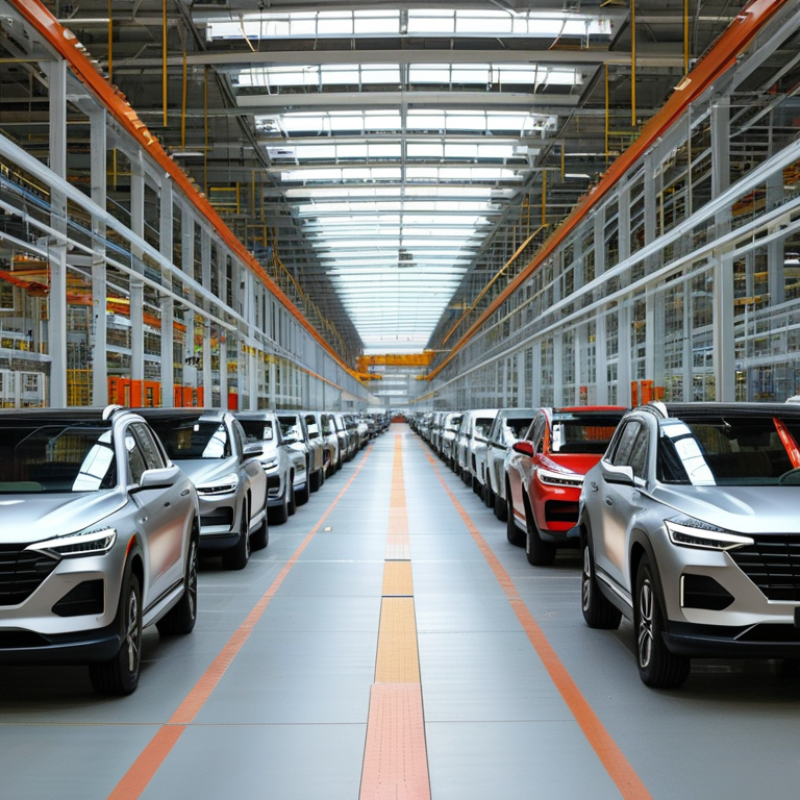
2026 Top Mexico Automotive Factories for Global Buyers

Mexico’s Automotive Manufacturing Landscape in 2026

Mexico’s Automotive Manufacturing Landscape in 2026

Mexico’s automotive manufacturing landscape in 2026 is becoming more regional, specialized, and demanding. Global buyers now assess more than factory capacity. They examine supplier depth, energy reliability, water access, rail connections, and labor stability. Northern plants benefit from links to the United States, while central corridors offer mature tooling and component networks. Southern sites are gaining attention, yet logistics can remain less predictable. A short drive on a map does not always mean a short delivery time.

Modern facilities are adding battery, electric-drive, software, and lightweight-component capabilities. However, traditional engines and transmissions still support many production lines. This mixed structure creates opportunities for buyers seeking flexible sourcing. During factory reviews, practical details matter: clean receiving areas, traceable lots, calibrated gauges, and documented maintenance. Ask how a plant handles a power interruption, delayed shipment, or sudden quality deviation. Answers reveal more than polished presentations. Some facilities still depend heavily on imported inputs, which can weaken resilience.

Mexico’s workforce remains a major advantage, supported by technical schools and experienced production teams. Yet training quality varies between regions and shifts. Buyers should verify safety records, environmental permits, labor practices, and data controls through independent audits. Renewable energy availability is improving, but grid constraints deserve careful checking. The outlook is strong, not perfect. A realistic sourcing plan should include backup logistics, dual suppliers, and time for local capability development. That extra work may feel slow. It often prevents expensive surprises.
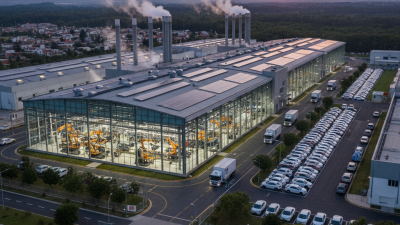

Leading Vehicle and Component Factories by Production Region

Mexico’s automotive map is regional, not uniform. In 2024, Mexico produced about 4.2 million motor vehicles, according to OICA’s global production table. Northern factories support export logistics, metal processing, and commercial-vehicle assembly. Key states include Coahuila, Nuevo León, Chihuahua, and Baja California.

The Bajío region connects vehicle assembly with dense component networks. Guanajuato, Querétaro, Aguascalientes, and San Luis Potosí offer access to stamped parts, interiors, electronics, and precision machining. Central Mexico adds mature industrial capacity in Puebla, Hidalgo, Morelos, and the State of Mexico. The Mexican Automotive Industry Association reported nearly 4.0 million light vehicles produced in 2024. The National Auto Parts Industry association also estimated Mexican component production at roughly 126.6 billion dollars that year.

Yet regional labels can mislead. A factory near the border may still face rail delays, water limits, or skilled-labor shortages. A Bajío site may look efficient, but supplier depth differs by municipality. Buyers should verify production history, local utilities, customs procedures, and second-source availability. This is where desk research alone becomes weak.

Tips: Compare three regions, not one. Request audited capacity data. Check delivery performance during peak months. Visit the site before signing. Ask how electricity, water, and worker training are secured. Small details often decide whether a promising plant performs reliably.

2026 Top Mexico Automotive Factories for Global Buyers

Mexico’s light-vehicle manufacturing output and export performance, providing a national benchmark for evaluating production regions and supplier access.

Production and export volumes increased substantially from 2021 to 2024. In 2024, Mexico produced 3,989,403 light vehicles and exported 3,479,086 units, highlighting the country’s importance as a manufacturing and global supply-chain base.

Source: INEGI, Registro Administrativo de la Industria Automotriz de Vehículos Ligeros, annual results for 2021–2024. Figures represent national totals and do not identify individual companies or brands.

Key Manufacturing Capabilities Offered to Global Buyers

Mexico’s automotive factories are becoming practical sourcing partners for global buyers in 2026. Their strongest offer is manufacturing depth, not simply lower production cost. Many facilities combine stamping, plastic injection, machining, welding, painting, and final assembly. This supports shorter supply chains for body structures, interiors, electrical housings, and precision components. A buyer can inspect a part flow from raw coil to boxed shipment. That visibility matters.

Modern plants increasingly use automated presses, robotic weld cells, vision inspection, and digital production records. Skilled technicians still adjust fixtures, validate first articles, and investigate process drift. This balance improves repeatability while preserving hands-on judgment. Capabilities often include prototyping, tool maintenance, line balancing, and supplier coordination. Some factories also provide testing for dimensions, torque, material strength, and environmental resistance. Ask for actual control plans, not polished presentations. Evidence is stronger than promises.

Global buyers should evaluate capacity with specific questions: What is the monthly output at the requested mix? How quickly can tooling change? Which processes remain manual? Factory tours should include maintenance areas and quarantine zones, where quality problems become visible. Regional logistics can support road, rail, port, and cross-border distribution, but schedules still face weather, customs, and labor disruptions. Planning must allow slack. No facility is perfect. A capable partner documents weaknesses, corrects root causes, and shares measurable progress. That honesty can be more valuable than impressive equipment.

2026 Top Mexico Automotive Factories for Global Buyers - Key Manufacturing Capabilities Offered to Global Buyers

Capacity figures are indicative public estimates and may vary by model mix, production shift, and market conditions. Facility descriptions are presented without company or brand names.
Manufacturing Location Facility Profile Primary Vehicle or Component Output Indicative Annual Capacity Key Manufacturing Capabilities Global-Buyer Advantages
Aguascalientes, Aguascalientes Large integrated passenger-vehicle assembly complex Compact and midsize passenger vehicles; selected powertrain operations Approx. 500,000 vehicles High-volume stamping, body welding, paint, final assembly, engine machining, automated material handling, quality traceability Strong export orientation, established supplier base, scalable production and cross-border logistics access
Saltillo, Coahuila High-volume light-truck and powertrain manufacturing site Pickup trucks, commercial vehicles, engines and related assemblies Approx. 300,000 vehicles plus engines Large-panel stamping, frame and body assembly, engine machining, powertrain testing, robotic welding and flexible trim operations Well suited to North American truck programs, heavy-duty components and just-in-time supplier integration
Ramos Arizpe, Coahuila Multi-line vehicle and electrified-powertrain manufacturing cluster Sport-utility vehicles, crossover vehicles, engines and battery-related systems Approx. 250,000–350,000 vehicles Vehicle assembly, engine production, battery-pack or electrified-component integration, automated inspection and advanced logistics Suitable for EV transition programs, SUV platforms and suppliers requiring mature northern-border infrastructure
Hermosillo, Sonora Flexible passenger-vehicle assembly plant with export capability Midsize cars, crossovers and light vehicles Approx. 200,000–300,000 vehicles Flexible body shop, stamping, paint, final assembly, powertrain installation, quality gates and supplier sequencing Direct rail and highway links to the United States; proven export production and flexible model changeovers
Puebla, Puebla Large integrated vehicle assembly and supplier ecosystem Passenger cars, sport-utility vehicles and body structures Approx. 300,000–400,000 vehicles Stamping, body-in-white, paint, final assembly, automated dimensional inspection, sequencing and high-volume quality systems Deep central-Mexico supplier network, strong rail access and experience with complex export programs
Silao, Guanajuato Large vehicle and powertrain production campus Pickup trucks, sport-utility vehicles, transmissions and engines Approx. 250,000–350,000 vehicles plus powertrains Engine and transmission machining, vehicle assembly, aluminum and steel component processing, testing and automated warehousing Central location within the Bajío automotive corridor, broad supplier availability and efficient national distribution
Celaya, Guanajuato Passenger-vehicle assembly and component manufacturing facility Compact vehicles, hybrid-capable platforms and transmissions Approx. 150,000–250,000 vehicles Body assembly, paint, final vehicle assembly, transmission production, automated torque control and end-of-line testing Access to Bajío engineering and supplier talent; suitable for compact platforms and electrified-vehicle components
San Luis Potosí, San Luis Potosí Modern flexible assembly plant serving export markets Passenger cars, crossovers and selected high-value assemblies Approx. 200,000–300,000 vehicles Flexible body shop, stamping, paint, final assembly, automated guided vehicles, digital production monitoring and quality traceability Central logistics position, modern production systems and convenient access to rail, highway and supplier corridors
Cuautlancingo, Puebla Integrated assembly complex focused on passenger vehicles and SUVs Passenger cars, sport-utility vehicles and body-in-white assemblies Approx. 250,000–350,000 vehicles High-speed body welding, paint systems, trim and final assembly, dimensional control, sequencing and export packaging Mature workforce, established logistics infrastructure and strong capability for large-volume vehicle programs
Tijuana, Baja California Northern-border automotive assembly and component manufacturing site Light vehicles, vehicle interiors, electronics and selected assemblies Approx. 100,000–200,000 vehicles or equivalent assemblies Final assembly, plastic and interior-component integration, electrical testing, quality inspection and cross-border logistics Immediate access to Southern California, established maquiladora infrastructure and short lead times for U.S. buyers
Monterrey Metropolitan Area, Nuevo León Automotive manufacturing cluster with vehicle, chassis and component capacity Commercial vehicles, light trucks, stamped parts, chassis systems and interiors Varies by facility; cluster-level capacity Stamping, welding, metal forming, plastics, interior assembly, chassis integration, machining and supplier localization One of Mexico’s strongest industrial labor pools, extensive supplier density and excellent U.S. border connectivity
Querétaro, Querétaro Advanced automotive component and systems manufacturing cluster Transmissions, braking systems, interiors, electrical systems and precision components Component-based; no single vehicle capacity Precision machining, die casting, plastic injection molding, electronics integration, testing and product engineering Strong engineering talent, central logistics location and suitability for Tier 1 and Tier 2 sourcing programs
Ciudad Juárez, Chihuahua Border manufacturing hub for automotive electronics and vehicle systems Wire harnesses, electronic modules, sensors, interiors and precision assemblies Component-based; high-volume multi-site output Electronics assembly, cable processing, automated testing, clean production areas, injection molding and traceability systems Fast U.S. border access, experienced electronics workforce and strong fit for nearshoring and just-in-time supply

Supplier Networks, Export Access, and Logistics Infrastructure

Mexico’s automotive factories in 2026 offer more than production capacity. For global buyers, supplier networks often determine whether a project scales smoothly.

During factory assessments, procurement teams should map nearby metal processors, plastics suppliers, tooling shops, and maintenance contractors. A dense local network can shorten replenishment times and reduce emergency freight. It also supports faster engineering changes.

Factory location remains critical. Plants near major highways, rail terminals, and border crossings can reach North American customers more efficiently.

Export access begins with documented customs procedures. Buyers should review tariff classifications, origin records, inspection routines, and broker performance. Small errors can delay a loaded trailer for days.

Sometimes, the paperwork is less mature than the machinery.

Logistics infrastructure needs a practical test. Request recent transit data, not only projected schedules. Check trailer availability, warehouse space, backup routes, and cold-weather or storm procedures. A site may have excellent road access but limited loading bays. That detail can disrupt daily shipments.

Experienced sourcing teams should run a pilot shipment before awarding full volume. Track pickup time, border clearance, delivery condition, and communication quality.

Local supplier resilience also deserves scrutiny. One missing casting or electronic component can stop an entire line.

Buyers should ask for second-source plans, safety-stock rules, and realistic recovery times.

No network is perfect. Regional growth can also create congestion, labor shortages, and higher logistics costs. These risks require regular review, not a one-time audit.

How Global Buyers Can Evaluate Mexican Automotive Factories

2026 Top Mexico Automotive Factories for Global Buyers

How Global Buyers Can Evaluate Mexican Automotive Factories

Evaluating a Mexican automotive factory requires more than reviewing production capacity. Buyers should inspect process control, workforce skills, supplier access, and export readiness. A factory may report high output, yet its changeover process could create delays. Ask to observe a live production shift.

Walk through stamping, welding, painting, and final assembly areas. Check traceability at each station. Can operators identify a component by batch number within minutes? Review calibration records, maintenance logs, and recent corrective actions. Strong facilities share evidence without excessive hesitation. That matters.

Assess logistics with real distances, not polished presentations. Measure the route from the plant to major highways, rail terminals, and border crossings. Seasonal congestion can change delivery performance. Request twelve months of shipment data, including late loads and damaged packaging. Perfect records may deserve closer questions.

Quality systems also need practical testing. Review defect rates, warranty feedback, containment procedures, and customer communication routines. Speak with supervisors and line workers separately. Their answers may reveal training gaps that documents hide. Labor stability is another factor, but it should not be judged from one meeting. Visit again during a normal operating week.

Financial and legal checks should include ownership records, permits, insurance, labor compliance, and environmental controls. Use independent technical audits when the order is significant. I would not rely on a single factory tour. A clean floor can impress visitors, but repeatable performance is harder to stage. Allow room for uncertainty, and record every assumption before signing a supply agreement.