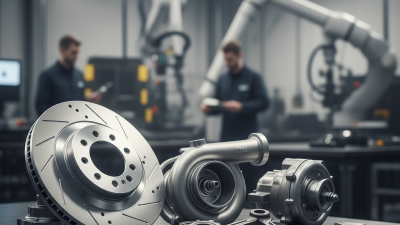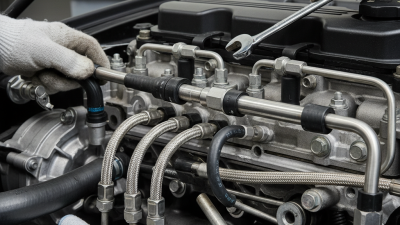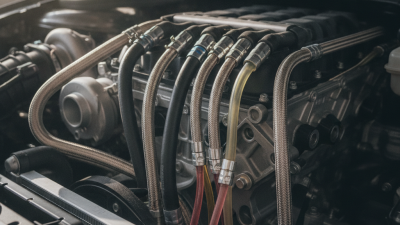
Choosing a reliable automotive tubing supplier is not simply a matter of comparing prices. In vehicle production, every tube carries responsibility. It may guide fuel, coolant, air, or hydraulic fluid through a crowded engine compartment. A dependable supplier understands these demanding conditions. Their engineers consider pressure, temperature, vibration, corrosion, and limited installation space. They also review bending radii and connection points before production begins. That practical experience can prevent leaks, premature wear, and expensive assembly delays. Small dimensional errors matter. A tube that is only slightly misaligned may create stress during installation.
Quality evidence matters more than confident promises. An established automotive tubing supplier should provide material certificates, inspection records, and clear traceability. Consistent suppliers usually control wall thickness, surface finish, hardness, and dimensional tolerances through documented procedures. They may follow recognized quality systems, such as IATF 16949, while supporting customer-specific testing requirements. Sample inspections, pressure testing, and corrosion evaluations can reveal weaknesses before mass production. These details build trust slowly. They should not be treated as paperwork alone.
No supplier is perfect, and that deserves honest attention. Even experienced teams can face material shortages, tooling changes, or unexpected design revisions. The important question is how openly they respond. A reliable partner explains risks early, offers practical alternatives, and records corrective actions. Site audits, technical discussions, and production samples can confirm whether their claims match reality. Choosing carefully protects vehicle performance, production continuity, and long-term customer confidence. It is a decision based on evidence, not polished language.
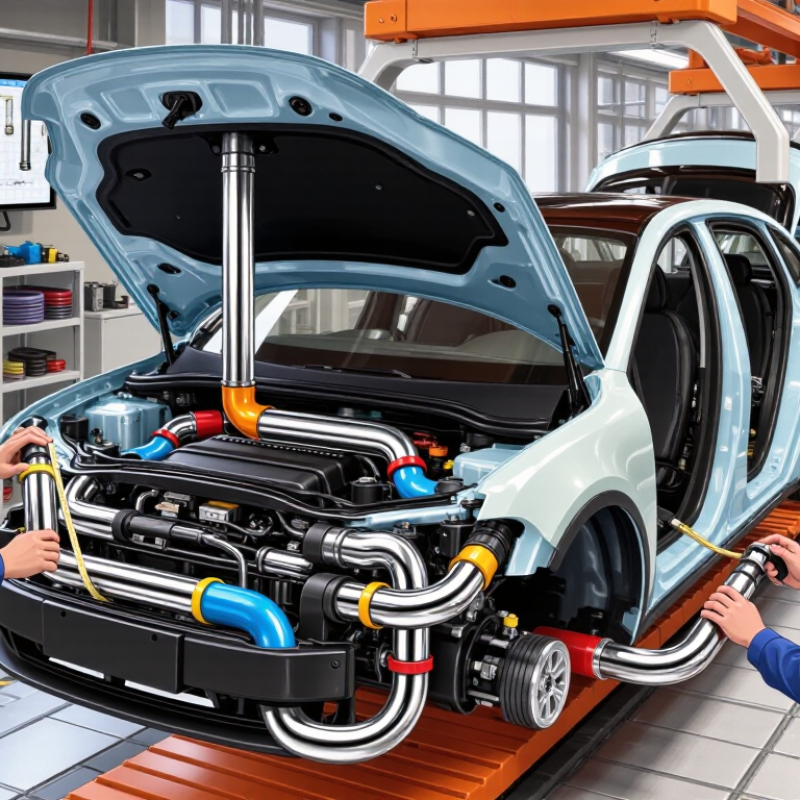
An automotive tubing supplier provides metal or polymer tubes for vehicle systems. These tubes may carry fuel, coolant, air, oil, or hydraulic fluid. They also support brake, exhaust, and structural applications. A professional supplier usually offers cutting, bending, flaring, welding, and surface treatment. These services help tubes fit tight spaces behind dashboards or beneath engine compartments.
A capable supplier understands more than tube dimensions. They review material grades, wall thickness, pressure demands, temperature changes, and corrosion risks. They should provide inspection records, material certificates, and repeatable production data. On a real production line, one poorly flared end can cause leakage and costly delays. Reliable suppliers use gauges, pressure tests, and traceability controls to reduce this risk. Still, no supplier predicts every demand perfectly. Honest communication matters when forecasts change.
Tips: Ask for sample parts and test reports. Check bending accuracy. Confirm delivery capacity. Discuss packaging before mass production. Inspect how workers protect tube ends from dents and dust. Also ask how complaints are handled. A supplier may offer excellent equipment yet lack responsive technical support. That weakness is easy to overlook.
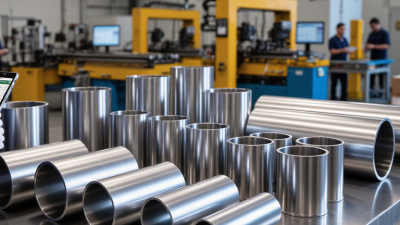
Why Choose a Reliable Automotive Tubing Supplier?
Reliable automotive tubing begins with the right standards, not attractive pricing. SAE J526 defines welded steel tubing requirements for many vehicle fluid applications. SAE J356 covers seamless low-carbon steel tubing. Stainless applications may require ASTM A269, especially where corrosion resistance and dimensional control matter. These standards address material, size, pressure performance, and testing. They do not automatically guarantee perfect production.
OICA reported 93.5 million motor vehicles were produced globally in 2023. That scale increases pressure on suppliers to deliver consistent tubing across different platforms. A dependable supplier should provide heat numbers, dimensional inspection records, burst-test results, and coating details. IATF 16949 certification also signals a structured automotive quality system. However, certification alone is not enough. Auditors should compare certificates with actual batch records and laboratory results.
Practical checks reveal more. Ask how tubing performs after bending, flaring, vibration, salt exposure, and temperature cycling. Inspect the cut edge. Look for cracks, uneven walls, or coating damage. ASTM and SAE references should match the application, not merely appear on a datasheet. A supplier may meet a standard on paper yet miss a customer’s real assembly tolerances. That gap deserves attention. Reliable sourcing requires technical review, traceability, and honest discussion about test limits.
| Standard or Requirement | Primary Scope | Typical Automotive Tubing Application | What a Reliable Supplier Should Demonstrate | Why It Matters |
|---|---|---|---|---|
| ISO 9001:2015 | Quality management systems for consistent products and processes. | General supplier quality management across material purchasing, forming, welding, inspection, and delivery. | A current certificate, controlled procedures, calibrated inspection equipment, corrective-action records, and traceable production documentation. | Helps reduce variation, delivery problems, and recurring nonconformities. |
| IATF 16949:2016 | Automotive quality management requirements built on ISO 9001 principles. | Production tubing supplied for vehicle manufacturers and automotive component programs. | Automotive process controls, product traceability, risk analysis, process-capability studies, change control, and customer-specific requirements management. | Provides stronger evidence that the supplier can control high-volume automotive production. |
| SAE J525 | Welded and cold-drawn low-carbon steel pressure tubing. | Hydraulic, power-steering, braking, and other vehicle fluid systems where the design specifies this tubing type. | Material certificates, controlled welding and cold-drawing processes, dimensional inspection, proof or burst testing where specified, and surface-finish records. | Supports reliable pressure containment and consistent tube geometry. |
| SAE J356 | Welded low-carbon steel tubing for automotive applications. | Fuel, brake, oil, water, air, and structural or exhaust-related tubing applications, subject to the applicable design specification. | Verification of outside diameter, wall thickness, weld integrity, mechanical properties, cleanliness, and corrosion-protection requirements. | Helps ensure that welded steel tubing meets defined automotive dimensional and performance requirements. |
| SAE J526 | Welded low-carbon steel tubing with specified dimensional and material requirements. | Automotive fluid lines and other applications requiring welded steel tubing. | Lot-level dimensional reports, weld-quality controls, material identification, and testing aligned with the purchase specification. | Improves interchangeability and reduces assembly problems caused by inconsistent dimensions. |
| ASTM A269/A269M | Seamless and welded austenitic stainless-steel tubing for general corrosion-resistant service. | Automotive thermal, fluid, sensor, and exhaust-related systems when stainless steel is specified. | Grade verification, heat-lot traceability, solution treatment records where applicable, dimensional checks, and hydrostatic or nondestructive testing as required. | Helps control corrosion resistance, cleanliness, and tube integrity. |
| ASTM A513/A513M | Electric-resistance-welded carbon and alloy steel mechanical tubing. | Structural members, seat components, chassis-related parts, and other mechanically loaded tube assemblies. | Steel-grade certification, weld-process control, mechanical-property verification, straightness checks, and dimensional inspection. | Provides predictable strength, formability, and fit for mechanically formed components. |
| ASTM A213/A213M | Seamless ferritic and austenitic alloy-steel boiler, superheater, and heat-exchanger tubing. | Specialized high-temperature or heat-transfer automotive systems when the engineering specification calls for this material standard. | Heat analysis, mechanical testing, heat-treatment records, nondestructive examination, and dimensional verification. | Supports performance in demanding temperature and corrosion environments. |
| ISO 14001:2015 | Environmental management systems. | Manufacturing operations involving steel, stainless steel, welding, drawing, cleaning, coating, and waste management. | Environmental objectives, compliance evaluations, energy and waste controls, and documented continual-improvement activities. | Supports responsible sourcing and helps customers evaluate environmental supply-chain risks. |
| RoHS and REACH Compliance | Restrictions and information requirements concerning certain substances in products and materials. | Tubing, coatings, plating, lubricants, sealants, and packaging supplied into regulated markets. | Material declarations, supplier chemical information, restricted-substance controls, and documentation applicable to the destination market. | Reduces regulatory, documentation, and market-access risks. |
| Customer Drawing and Validation Requirements | Application-specific requirements for dimensions, tolerances, forming, cleanliness, pressure, fatigue, corrosion, and packaging. | All safety-critical and performance-critical automotive tube assemblies. | First-article inspection, capability data, validation test reports, change notification, batch traceability, and approved control plans. | Confirms that the tubing is suitable for the actual vehicle system rather than merely meeting a general material standard. |
Note: The applicable standard depends on the tube material, manufacturing method, pressure, temperature, corrosion environment, safety classification, and customer drawing. A reliable supplier should provide current, traceable evidence for every requirement that applies to the specific part.
Tubing quality directly influences how reliably a vehicle moves heat, fuel, air, and hydraulic pressure. A poorly formed tube can restrict flow, vibrate against nearby parts, or develop fatigue cracks after repeated thermal cycles. Small defects matter. In workshop inspections, ovality, uneven wall thickness, and rough bends often reveal more than a polished surface.
The U.S. Department of Energy reports that reducing vehicle weight by 10% can improve fuel economy by roughly 6–8%. Lightweight tubing can support that goal, but only when strength remains consistent. An overly thin wall may save grams and create expensive failures. That trade-off deserves careful review.
Material certificates, dimensional checks, burst testing, and corrosion testing help verify real performance before installation.
The U.S. Environmental Protection Agency’s Automotive Trends Report tracks vehicle mass, fuel economy, and emissions together. Its findings reinforce a practical point: component decisions affect wider vehicle efficiency. Tubing with stable tolerances helps maintain coolant circulation, brake response, and exhaust control under changing temperatures. Supplier experience also matters during routing and fitting. A tube may pass a pressure test and still fail because its bend radius is wrong. I would not judge quality from test data alone. Field feedback, traceability, and repeat production results provide the missing evidence.
A reliable automotive tubing supplier should provide more than cut lengths and delivery dates. It should help engineers select steel, aluminum, or multilayer polymers for pressure, temperature, vibration, and fluid compatibility.
The International Energy Agency reported nearly 14 million electric cars were sold globally in 2023, representing about 18% of new car sales. This shift increases demand for coolant, refrigerant, battery, and thermal-management tubing.
Technical support matters on the production floor. A capable supplier should offer 3D forming, bending trials, welding guidance, prototype batches, and dimensional reports. It should also perform burst, leak, corrosion, vibration, and thermal-cycle testing.
IATF 16949-based quality systems, PPAP documentation, material certificates, and lot traceability make problems easier to investigate. Small details matter. A readable serial number can save hours during a recall investigation.
Delivery service needs equal attention. The supplier should provide safety-stock planning, capacity updates, packaging that prevents tube deformation, and documented change control.
The U.S. Environmental Protection Agency’s Automotive Trends Report shows continuing pressure to improve vehicle efficiency, so lightweighting and process consistency are not optional concerns.
A polished brochure is not enough. I would still ask for test samples, audit records, and failure-response times. No process is flawless, but unclear evidence is a warning sign.
Choosing a reliable automotive tubing supplier requires more than comparing unit prices. Manufacturers should examine material knowledge, process control, and delivery evidence. Ask for tubing specifications, dimensional tolerances, pressure ratings, and applicable test methods. A capable supplier should explain how it controls wall thickness, ovality, surface defects, and cleanliness. Request recent inspection records, not only a polished presentation. Small details reveal daily discipline.
Evaluate practical experience through samples, technical discussions, and an on-site audit. Provide the supplier with realistic drawings and operating conditions. Then check whether the proposed tubing meets forming, bending, vibration, and corrosion requirements. Traceability should connect each finished coil to its material heat or production lot. Ask how nonconforming tubing is isolated and investigated. Review calibration records, weld monitoring, leak testing, and corrective actions. Test samples independently when the application carries serious pressure or safety demands. Silence is a warning.
Selection should also cover capacity, tooling, packaging, logistics, and contingency planning. Request a pilot order before approving regular production. Compare promised lead times with actual shipment records. Confirm that packaging prevents scratches, moisture, and deformation during transport. A low price can hide weak inspection or unstable capacity. The evaluation itself can be imperfect. A supplier may pass an audit yet struggle during a sudden volume increase. Keep questions open, document assumptions, and revisit performance after real production begins.
Supplier selection should balance product quality, process control, delivery performance, traceability, technical capability, and total cost. The reference scores below use a 100-point evaluation model commonly aligned with automotive supplier qualification practices.
Quality-system compliance and APQP/PPAP capability receive the highest scores because they help manufacturers reduce production risk, maintain consistent tubing performance, and support reliable product launches.