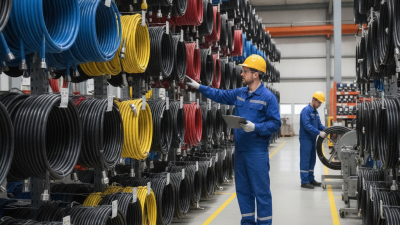
Choosing an automotive tubing supplier is not a routine purchasing decision. A tube may look simple on a drawing, yet its wall thickness, bend radius, material, and coating can affect fit, durability, and assembly time. The scale of vehicle manufacturing makes supplier performance consequential. OICA reported 93.5 million motor vehicles produced worldwide in 2023. The International Energy Agency’s Global EV Outlook 2024 also projected nearly 17 million electric-car sales that year. These shifts do not prove tubing demand by themselves, but they highlight how quickly vehicle requirements can change.
Quality expert W. Edwards Deming wrote, “Quality comes not from inspection, but from improvement of the production process.” His principle offers a useful lens for supplier evaluation. Ask how a supplier controls dimensions, verifies material, documents batches, and responds when a part fails inspection. Request evidence, not promises: sample inspection records, process-control data, and clear traceability. Check whether its equipment can repeatedly meet your specified tolerances, not just produce one attractive prototype.
Price still matters. But a low quote can conceal longer lead times, inconsistent bends, or costly rework. Small details matter. A sample tube with a clean cut end tells you little about production consistency. Examine the supplier’s technical support, testing capability, capacity, and communication before approving a program. Then review your own assumptions. Are you comparing equivalent materials and test requirements, or only unit prices? The right choice depends on the application, and no supplier should be trusted on reputation alone. Verify the fit with your drawings, standards, and production needs.
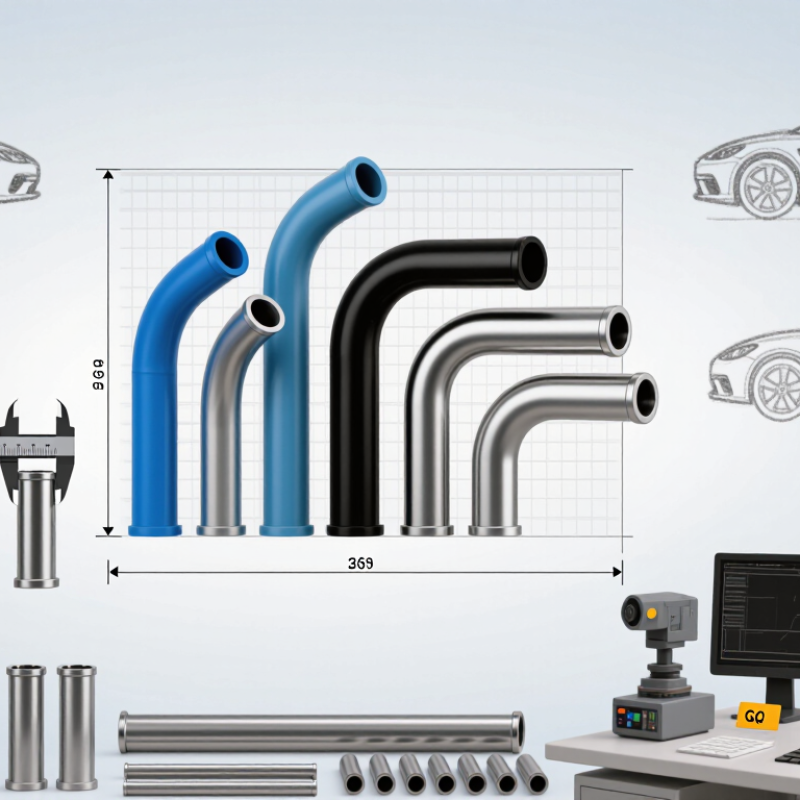
Before comparing suppliers, describe what the tubing must do in its actual location. Record the conveyed fluid or gas, operating pressure, temperature range, and expected service life. Include brief pressure spikes, not just normal readings. They matter. A tube carrying coolant near an engine faces different heat and chemical exposure than a line routed beneath the vehicle.
Map the route and note tight bends, nearby moving parts, vibration, and possible contact with sharp edges. Specify required inner and outer diameters, wall thickness, length, bend radii, and dimensional tolerances. Also identify the connection method, such as a flare, bead, or formed end. Small details matter. A fitting that looks compatible on a drawing may be difficult to assemble in a cramped production space.
Material selection should reflect the full environment, including corrosion exposure and fluid compatibility. Ask suppliers what material data, inspection records, and production traceability they can provide. If requirements are uncertain, state the assumptions and invite technical review rather than hiding them. No specification predicts every condition. A first sample may reveal unexpected noise, assembly difficulty, or a routing conflict. Build representative prototypes and test them under realistic pressure, temperature, and vibration conditions before locking the design. The extra iteration can feel inconvenient, but it may expose a weak assumption while changes are still manageable.
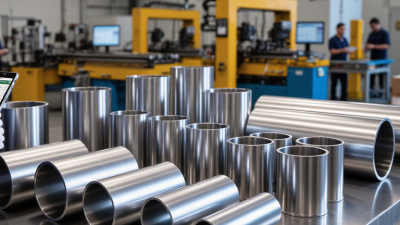
Choosing automotive tubing begins with service conditions, not a catalog label. Note the fluid or gas, operating pressure, temperature swings, vibration, and exposure to road salt. Stainless steel may suit corrosion-prone areas, while coated steel or aluminum can reduce weight in suitable systems. Confirm compatibility with fittings and joining methods; a smooth-looking tube can still fail at a connection. Fit matters.
Dimensions matter just as much. Check outside diameter, wall thickness, bend radius, ovality, and tolerance requirements against the drawing. Ask how measurements are verified and whether inspection records accompany production lots. Small deviations can complicate assembly, especially where a tube must pass through a tight bracket.
Tips: Send a marked-up drawing and, if available, a physical sample. Ask the supplier to explain its material documentation, weld inspection, dimensional checks, and lot traceability. Compare seamless and welded options in context: the process affects cost, availability, and consistency, but neither is automatically best. Request trial bends or prototype parts before volume production, then test them under realistic loads. Revisit assumptions after the first build; installation angles and fixtures can reveal details the drawing missed.
A supplier’s quality system should be visible in everyday records, not just a certificate on a wall. Ask how incoming steel, forming, welding, and final inspection are documented. Check whether measuring tools are calibrated and whether production lots can be traced from raw material to shipment. A certificate is a starting point, not proof that every tube suits your application. Confirm its scope, issuing body, expiry date, and covered production site.
Tips: Request sample inspection reports and test results for the tubing you plan to buy. Look for actual measurements, test dates, lot numbers, and acceptance limits. For a pressure line, ask about pressure or leak testing; for exposed components, check whether corrosion testing is relevant. Details matter.
Testing should reflect real service conditions, including temperature, vibration, pressure, and dimensional tolerances. Ask what happens when results fall outside limits. A useful answer describes containment, root-cause review, and corrective action, rather than simply promising it will not happen again. If a supplier cites an industry certification, verify that it applies to the process and product in question. Paperwork can be tidy while a production detail gets missed; reviewing recent records and discussing a specific sample often reveals more.
A capable automotive tubing supplier should match its production capacity to your real demand, not just quote an impressive maximum. Ask about available forming lines, shift patterns, and how the shop handles a sudden volume increase. A supplier running near full capacity may struggle when a prototype order becomes a production schedule. Ask for examples of similar tubing sizes, materials, and annual volumes. Specific answers matter.
Technical support is most useful when it reaches beyond the sales desk. Engineers should be able to discuss wall thickness, bend radius, dimensional tolerances, and how a design change could affect manufacturability. Request sample inspection data and clarify how nonconforming parts are documented and corrected. A quick drawing review can reveal a clearance issue before tooling is committed. Small details count. Still, no supplier can eliminate every production problem, and an overly polished answer deserves a second look.
Delivery reliability depends on more than the promised lead time. Ask how raw material availability, tooling maintenance, and inspection affect the schedule, and whether the supplier tracks delivery performance. Confirm who communicates delays and how often updates arrive. A dated production plan is more useful than verbal reassurance. Check whether packaging protects tube ends and finished surfaces during transport; dents can create extra handling and inspection work. Even a strong supplier may miss a date occasionally, so judge the quality of its response, not just its forecasts.
How to Choose the Right Automotive Tubing Supplier?
Compare Total Cost and Validate the Supplier Before Selection
A low quote can be expensive. Compare tubing prices alongside tooling, inspection, packaging, freight, and likely scrap costs. Ask for a written breakdown, including minimum order quantities and charges for specification changes. For example, a small difference in wall thickness can affect forming time and rejection rates. Check whether the quoted material, dimensions, and tolerances match your drawing exactly. I still find that delivery assumptions are easy to overlook; a cheap order arriving late can disrupt production.
Validate the supplier with evidence, not polished promises. Request sample tubing and check dimensions, surface condition, and fit using your actual process. Review material test records, inspection procedures, and batch traceability. Ask how nonconforming parts are contained and reported. If possible, visit the facility or arrange a qualified third-party audit. A trial order can reveal packing damage, labeling errors, or inconsistent documentation before larger volumes are committed. No checklist catches everything, so keep the first review practical.
Tips: Compare total landed cost over the same order volume and delivery schedule. Confirm sample approval, quality records, and change-control expectations in writing. Ask for realistic lead times, not best-case estimates. Small omissions matter.
Compare total cost and validate the supplier before selection.
How to read this: Compare estimated total cost per 1,000 m, not just the quoted tubing price. This illustrative RFQ scenario adds freight, incoming inspection, and estimated quality-related costs; it is not market or supplier data.
Before selecting a supplier, verify material and dimensional certifications, process capability, traceability, quality records, delivery performance, and the assumptions behind any quoted costs.