Inquiry
Form loading...



China has become a major sourcing center for car coolant hoses, but supplier selection requires more than comparing prices. A reliable manufacturer should understand heat cycles, coolant chemistry, vibration, pressure, and limited installation space. The best factories usually provide EPDM or silicone options, controlled molding, dimensional inspection, burst testing, ozone resistance testing, and heat-aging records.
As automotive hose engineer John R. Sweeney explains, “A coolant hose is a pressure-bearing component, not merely a flexible connector.” This principle deserves attention. A hose may look smooth and strong on a showroom sample, yet fail after repeated temperature changes under the hood. That failure can leave a vehicle beside the road, with coolant spreading across a hot engine.
This guide examines China’s top car coolant hoses suppliers through practical purchasing criteria. It considers material consistency, production experience, quality systems, customization capability, delivery reliability, and after-sales communication. Certifications can help, but certificates alone do not prove stable production. Factory audits, batch records, test reports, and physical samples matter more.
Some suppliers offer attractive quotations. That is not always a weakness, but it demands questions. What compound is used? How is wall thickness controlled? Can the factory trace a batch after delivery? Are molds maintained regularly? These details often separate a dependable partner from a temporary trader.
The ranking may not be perfect. Supplier performance can change with ownership, equipment, or raw-material sources. Buyers should verify current evidence before placing large orders. A careful decision protects engines, reduces warranty disputes, and supports safer long-term vehicle operation.
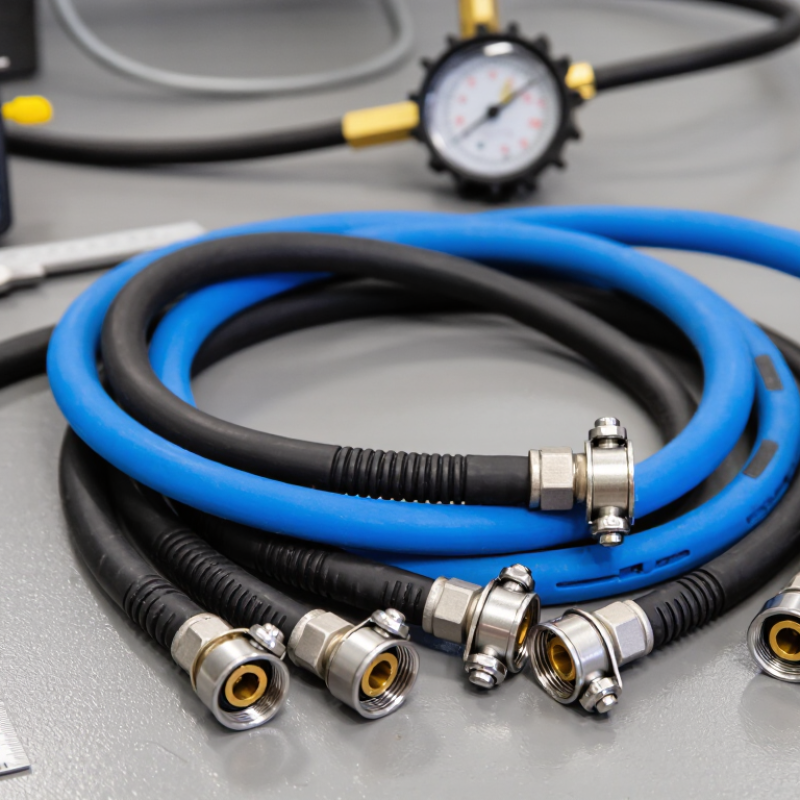
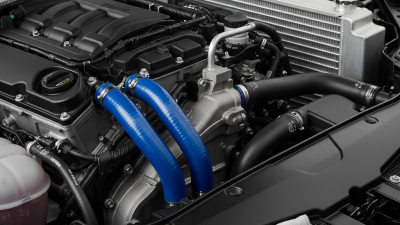
Car coolant hoses are flexible passages that carry coolant between the engine, radiator, heater, and expansion tank. Their job is simple but essential. They help control engine temperature under traffic, hills, and hot weather. A damaged hose can release coolant quickly. Then the engine may overheat within minutes.
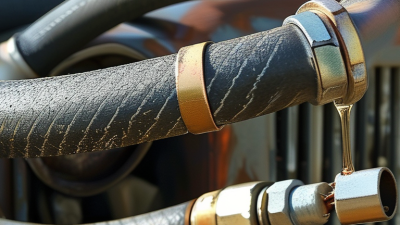
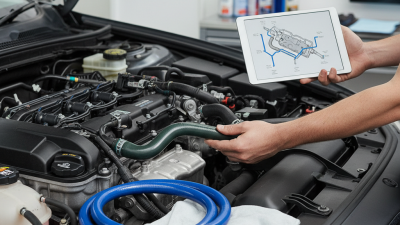
During workshop inspections, I check hose surfaces, bends, clamps, and contact points. I squeeze each hose carefully. A healthy hose feels firm but not brittle. Hard areas, swelling, surface cracks, or oily residue need attention. Shorter is not always better. A hose under tension may fail earlier. Reliable suppliers should provide accurate dimensions, temperature ratings, pressure information, and suitable rubber or silicone specifications. Material quality matters more than appearance. A shiny hose is not automatically a dependable one.
Coolant hoses also need correct routing. If a hose rubs against a fan housing or sharp bracket, tiny damage can develop unnoticed. I have seen replacements fail because the clamp was tightened unevenly. That mistake is easy to make. Before removal, compare the new hose with the old one and photograph the original position. After installation, refill the cooling system and remove trapped air according to the vehicle’s service procedure. Still, visual inspection has limits. Internal separation can occur without obvious warning, so age, mileage, heat exposure, and service history should also influence replacement decisions.
| Evaluation Dimension | Reference Data | Why It Matters |
|---|---|---|
| Primary Function | Carries engine coolant through the cooling circuit and helps maintain the engine within its intended operating temperature range. | A failed hose can cause rapid coolant loss, overheating, engine damage, and vehicle downtime. |
| Common Hose Material | Automotive EPDM rubber is widely used because it resists hot water, glycol-based coolants, ozone, and weathering. | Material compatibility helps prevent swelling, cracking, hardening, and premature leakage. |
| Typical EPDM Temperature Range | Approximately -40°C to +135°C for continuous service, with short-term peak capability commonly reaching about +150°C depending on formulation and construction. | The actual rating must be confirmed against the supplier’s technical datasheet and the vehicle’s operating conditions. |
| Silicone Coolant Hose | Typical silicone coolant hoses are designed for approximately -50°C to +180°C, although the rating varies by reinforcement, wall construction, and compound. | Silicone can provide a wider temperature range, but it may require correct clamp selection and should be verified for the specific coolant and application. |
| Reinforcement | Textile reinforcement is commonly used in molded and straight coolant hoses. The reinforcement pattern and ply count depend on pressure, shape, and application. | Reinforcement improves dimensional stability, pressure resistance, and resistance to hose expansion. |
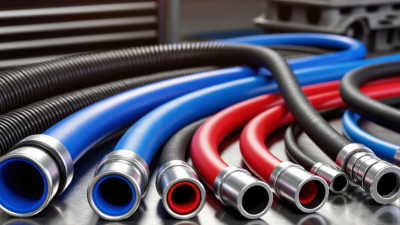
| Hose Construction | Common constructions include straight hoses, molded hoses, formed hoses, reducer hoses, elbow hoses, and multi-branch assemblies. | Correct geometry prevents kinking, restricted coolant flow, excessive tension, and contact with hot or moving components. |
| Applicable Industry Reference | SAE J20 is a widely recognized reference for automotive coolant and heater hoses. The applicable class and construction should match the vehicle requirement. | Using a recognized specification improves consistency when comparing materials, dimensions, performance, and test requirements. |
| System Pressure Consideration | Many passenger-vehicle cooling systems operate with a pressure cap setting of approximately 0.9–1.5 bar, but the hose working and burst ratings must be obtained from the product specification. | A hose should never be selected solely by nominal diameter; pressure, temperature, routing, and surge conditions must also be considered. |
| Coolant Compatibility | The hose should be compatible with the specified water-glycol coolant and additive package. Compatibility depends on compound formulation, coolant concentration, and service temperature. | Incompatible materials may soften, swell, become brittle, or release particles into the cooling system. |
| Dimensional Control | Important dimensions include inner diameter, outer diameter, wall thickness, bend angle, centerline radius, branch location, and overall length. | Accurate dimensions provide a secure seal and prevent installation stress or interference with nearby parts. |
| Clamp and Connection Fit | The hose end must match the connector diameter, bead profile, insertion length, and selected clamp type. Spring clamps and constant-tension clamps are commonly used in automotive cooling systems. | Poor fit can cause coolant seepage, hose pull-off, local cutting, or leakage during thermal cycling. |
| Required Quality Tests | Typical evaluations include dimensional inspection, hardness, tensile strength, elongation, burst pressure, leakage, heat aging, coolant immersion, ozone resistance, and low-temperature flexibility. | Testing confirms that the hose can withstand real thermal, chemical, mechanical, and environmental conditions. |
| Supplier Management System | A documented ISO 9001 quality system is a useful baseline. For vehicle production programs, IATF 16949 capability and customer-specific requirements may also be requested. | Documented process control supports traceability, repeatable production, corrective action, and stable batch quality. |
| Recommended Supplier Documents | Request material data sheets, inspection reports, test records, dimensional drawings, control plans, sample approval records, and batch traceability information. | Complete documentation makes technical comparison and incoming-quality verification more reliable. |
| Common Failure Symptoms | Surface cracking, swelling, soft spots, hardening, abrasion, collapsed sections, coolant stains, and leakage around the clamp area. | Early identification helps prevent overheating and allows replacement before a complete hose rupture occurs. |