What Is an Automotive Parts Manufacturer?
What is an automotive parts manufacturer? It is a company that designs, engineers, produces, or assembles components for vehicles. It may supply engines, braking systems, wiring harnesses, seats, sensors, or battery modules. It is not merely a factory. Many firms also validate materials, manage traceability, and support vehicle programs for years. Some sell directly to vehicle manufacturers, while others operate as Tier 1, Tier 2, or aftermarket suppliers.
The scale is enormous. OICA reported 93,546,599 motor vehicles produced worldwide in 2023. Every vehicle depends on thousands of inspected parts, from a stamped bracket to a calibrated radar sensor. The International Energy Agency reported nearly 14 million electric car sales in 2023, representing about 18% of global car sales. That shift is changing supplier expertise. Battery safety, thermal management, power electronics, and software integration now sit beside traditional machining and casting.
Industry reports add useful context. Deloitte’s 2024 Global Automotive Supplier Study highlights pressure from electrification, cost inflation, supply resilience, and changing customer expectations. These pressures make quality systems, capable engineering teams, and transparent sourcing central to the manufacturer’s role. In practice, frameworks such as IATF 16949 help suppliers control automotive quality processes, but certification alone does not guarantee dependable performance. That point matters. A polished brochure can hide weak production discipline. A credible automotive parts manufacturer should show measurable defect controls, testing records, responsible material sourcing, and realistic delivery performance. The definition is not perfectly tidy. A small specialist may be more innovative than a large supplier, yet less able to absorb disruption. Understanding this balance helps buyers, engineers, and readers judge capability beyond factory size.
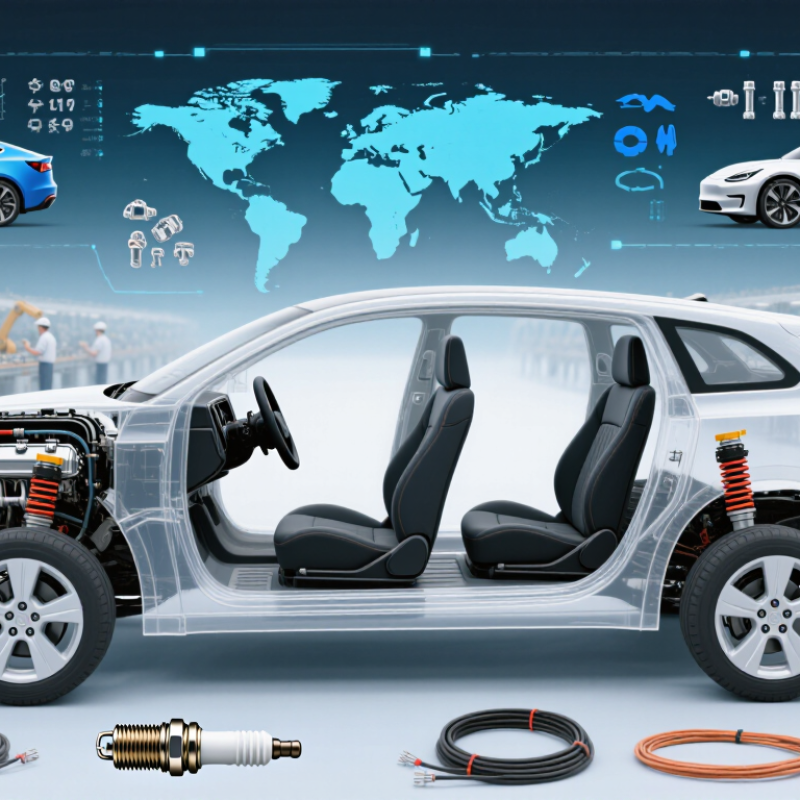
What Defines an Automotive Parts Manufacturer? Scope and Core Functions
What Is an Automotive Parts Manufacturer?
An automotive parts manufacturer designs, produces, and verifies components used in vehicles. Its scope extends beyond making metal pieces. It may supply engines, braking systems, wiring, sensors, interiors, software-linked modules, or replacement parts. Some manufacturers build complete systems. Others produce precise fasteners or molded housings.
Core functions usually include product engineering, material selection, tooling, machining, assembly, testing, and quality control. Production also requires supplier coordination, batch traceability, process documentation, and delivery planning. OICA recorded 93,546,599 motor vehicles produced worldwide in 2023. That scale demands repeatable processes, not occasional craftsmanship. Electrification is changing the work. The International Energy Agency reported nearly 14 million electric car sales in 2023, representing about 18% of global car sales. Battery enclosures, thermal-management parts, power electronics, and high-voltage safety controls are gaining importance. The boundary is not perfectly clean. A company may manufacture parts, integrate systems, and provide engineering services simultaneously. That makes simple definitions less useful.
Tips: Check whether a supplier controls design, production, testing, or only distribution. Ask for process-capability records, inspection methods, and traceability examples. Data often reveals more than polished claims.
Experience from factory audits shows a practical weakness: documentation can look complete while production changes remain poorly recorded. Manufacturers should review tooling wear, material substitutions, and software revisions regularly. Small gaps matter. Reliable production depends on disciplined evidence, trained operators, and honest corrective action.
How OEM and Aftermarket Suppliers Fit the Tier 1–3 Structure
What Is an Automotive Parts Manufacturer?
An automotive parts manufacturer produces components used in vehicle assembly, repair, or maintenance. Its position becomes clearer through the Tier 1–3 supplier structure. Tier 1 suppliers deliver complete systems directly to vehicle manufacturers, such as braking modules, seating systems, or electronic assemblies. They manage strict specifications, testing, documentation, and delivery schedules. Their work often requires deep engineering experience and dependable production controls.
Tier 2 suppliers usually provide parts or subassemblies to Tier 1 companies. They may machine housings, mold connectors, or produce sensors and fasteners. Tier 3 suppliers work closer to basic materials and processes, including metal forming, plastic compounds, castings, or surface treatments. The structure looks tidy on paper, but real supply chains overlap. One manufacturer may serve several tiers, depending on its capabilities and contracts. A small tolerance change can affect an entire assembly.
Tips: Check a supplier’s inspection records, material traceability, process controls, and capacity before judging its tier. Ask whether it supports OEM production, aftermarket replacement, or both. Aftermarket suppliers often focus on compatible fit, practical availability, and replacement value. They may follow different development routes, yet reliable testing remains essential. A polished catalogue proves little. Factory evidence matters more. Even experienced buyers can miss packaging damage or inconsistent labeling during incoming inspection. That weakness deserves honest review.
Which Standards Govern Quality? IATF 16949 and PPAP’s 18 Elements
What Is an Automotive Parts Manufacturer? The answer extends beyond machining, molding, or assembly. A serious supplier must control design, materials, production, and evidence. IATF 16949 provides the automotive quality framework, while PPAP proves whether a process can repeatedly meet requirements. The ISO Survey 2023 recorded more than 1.2 million ISO 9001 certificates worldwide. Yet ISO 9001 alone does not address every automotive risk. IATF 16949 adds stronger controls for traceability, defect prevention, change management, and customer-specific requirements.
PPAP contains 18 elements. They include design records, engineering change documents, customer approvals, DFMEA, process-flow diagrams, PFMEA, control plans, measurement-system studies, dimensional results, material tests, initial process studies, laboratory records, appearance approvals, production samples, master samples, checking aids, customer requirements, and the Part Submission Warrant. Each file should connect to the shop floor. For example, a bore dimension on the drawing should appear in the control plan, inspection record, and capability study. A tidy file can still hide a weak process. The uncomfortable point is that a signed PSW does not prove long-term stability.
Tips: Walk the process with the PPAP package open. Check labels, gauges, revision levels, and reaction plans. Review capability data under real production conditions, not only during a carefully managed trial. The 2023 Quality Management Principles guidance also stresses evidence-based decisions. Still, data can mislead when sampling is too small. Ask who collected it, when, and what changed afterward.
Why the Industry Matters: 93.5 Million Vehicles Built in 2023
What Is an Automotive Parts Manufacturer?
Why the Industry Matters: 93.5 Million Vehicles Built in 2023
An automotive parts manufacturer designs and produces components used in vehicles. These parts include braking systems, wiring, seats, sensors, body structures, and powertrain components. Some manufacturers produce visible parts, while others make small pieces hidden beneath the dashboard. Every component must fit accurately, perform reliably, and meet strict safety requirements.
The scale is significant. According to the International Organization of Motor Vehicle Manufacturers (OICA), global production reached 93,546,599 motor vehicles in 2023. That figure represents passenger vehicles, commercial vehicles, and other road vehicles. Each one requires thousands of individual components. A minor supply delay can leave an assembly line waiting beside unfinished frames and sealed cartons.
The industry is also changing quickly. The International Energy Agency reported nearly 14 million electric car sales worldwide in 2023, representing about 18% of new car sales. This shift increases demand for battery enclosures, thermal-management systems, high-voltage connectors, and electronic controls. Traditional components still matter, but their specifications are evolving. Parts manufacturers must combine engineering expertise, traceable testing, and disciplined quality systems, such as IATF 16949-based processes. Yet production data is not perfectly simple. OICA totals measure vehicles built, while energy reports measure sales, so the figures should not be treated as identical. That distinction is easy to miss.
Automotive parts manufacturers supply the engines, electronics, braking systems, body components, interiors, and other parts required to assemble vehicles. Global vehicle production reached 93.5 million units in 2023, highlighting the scale and economic importance of the parts manufacturing industry.