Finding the right OEM auto parts supplier is not a simple price comparison. It is a risk decision involving quality, traceability, engineering support, and long-term capacity.
S&P Global Mobility reported that the average U.S. light vehicle reached 12.6 years in 2024. Older vehicles create steady demand for replacement components, but buyers still expect original-equipment performance. Deloitte’s 2024 Global Automotive Supplier Study also highlights continuing margin pressure, supply-chain uncertainty, and technology investment challenges. These pressures make supplier verification more important than ever.
A polished website proves little.
An experienced sourcing team should inspect IATF 16949 certification, PPAP capability, material records, production samples, and corrective-action procedures. Ask to see a real control plan, not a generic presentation. Check cavity marks, dimensional reports, packaging strength, and batch traceability. Small details often reveal large weaknesses.
John Henke, a recognized automotive supplier-relations researcher, has emphasized that “trust and cooperation are essential” in effective automaker–supplier relationships. His point deserves practical testing. Can the supplier answer technical questions quickly? Can it explain tooling ownership, warranty handling, inspection frequency, and delivery contingencies?
The cheapest quotation may become expensive after rework, delayed shipments, or field failures. Still, certification alone is not proof of consistent performance. That is where buyers can be too optimistic. A factory audit, independent inspection, pilot order, and documented service agreement provide stronger evidence.
This guide explains how to compare an OEM auto parts supplier using measurable criteria, careful questions, and evidence gathered before production begins.
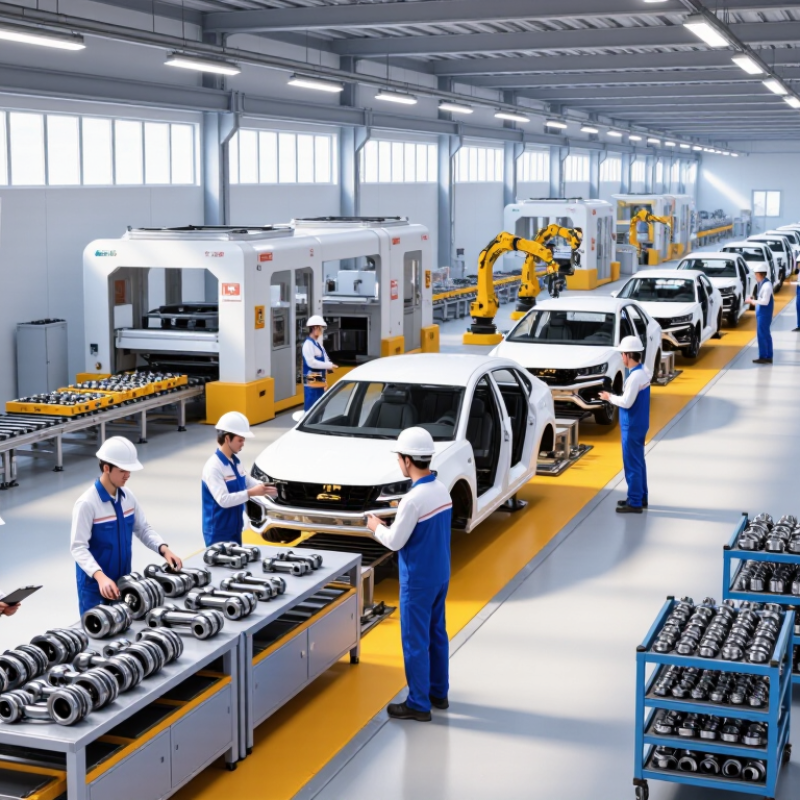
China produced a significant share of the world’s automotive components in 2023. OICA reported 93.5 million motor vehicles produced globally that year. This scale creates opportunity, but vague requirements create expensive mistakes.
Write a technical requirement sheet before contacting suppliers. Include the part number, material grade, dimensions, tolerance, surface treatment, testing standard, packaging, and annual volume. Add clear vehicle applications and expected service conditions. A brake component, for example, may face heat, vibration, moisture, and repeated load cycles.
Be specific. Very specific.
Your sourcing goal should also include target cost, minimum order quantity, lead time, payment terms, and quality expectations. Decide whether you need an engineering partner, a production supplier, or only a replacement-part manufacturer. These roles require different audits and communication methods.
The 2024 KPMG Global Automotive Executive Survey identifies supply-chain resilience and cost pressure as major industry concerns. Therefore, ask suppliers about material traceability, backup production capacity, inspection records, and corrective-action procedures. Request sample approval before mass production. One overlooked tolerance can affect assembly performance.
I have seen buyers focus too heavily on unit price. That approach often ignores tooling, rework, freight, and delayed delivery. A lower quotation may not be the lower total cost. Recheck every assumption. Supplier claims still need evidence.
Verify supplier credentials before discussing price. Request the business license, quality certificates, export records, and current audit reports. Confirm that the legal entity matches the factory shown during a video or on-site visit. ISO 9001 helps, but it does not prove automotive capability. IATF 16949 certification, process audits, and traceable inspection records offer stronger evidence. Check certificate numbers with the issuing organization. Small detail. Big consequence.
Factory capacity must match your forecast, not just a sales promise. Ask for monthly production figures, machine lists, shift schedules, and recent utilization rates. Review how the supplier controls molds, raw materials, heat treatment, and final inspection. China Association of Automobile Manufacturers reported 30.16 million vehicle production units in 2023, showing a deep manufacturing base. Yet capacity differs sharply between factories. Visit the line, count active workstations, and compare equipment with your drawings.
OEM experience requires evidence, not familiar wording. Ask for anonymized project timelines, PPAP samples, control plans, change records, and warranty data. A supplier should explain how it handled dimensional deviations or late materials. S&P Global Mobility’s 2024 industry analysis highlights rising vehicle complexity and tighter technology integration, increasing the need for disciplined supplier controls. One weakness remains: references can be selective. Cross-check claims through shipment documents, inspection agencies, and technical interviews. Never let a low quotation replace verification.
How to Find the Best China OEM Auto Parts Supplier?
Evaluate Product Quality, Certifications, and Quality Control Systems
Choosing a China OEM auto parts supplier requires more than comparing unit prices. Product quality should match drawings, tolerances, materials, and intended vehicle use. Request production samples, inspection records, and test results from mass-production processes. A polished sample can hide weak control. Ask how parts perform after heat, vibration, corrosion, or repeated loading. Use independent testing for safety-critical applications.
Certifications provide useful evidence, but they do not automatically prove quality. Check the certificate number, issuing body, validity period, and covered factory address. Confirm that the scope includes automotive manufacturing or the relevant process. A supplier may hold ISO 9001 without having stronger automotive controls under IATF 16949. Request PPAP documents, material certificates, process flow charts, and measurement-system studies. Traceability should connect each finished part to its batch, operator, machine, and inspection data.
During an audit, inspect incoming-material checks, calibrated gauges, first-article approval, in-process inspection, and final release procedures. Ask to see nonconforming-part areas. Review corrective-action reports, not only polished procedures. Quality control often fails during shift handoffs. I would also test a small pilot order before increasing volume. It costs more initially. It can reveal unstable dimensions, packaging damage, or inconsistent surface treatment. No checklist is perfect. Discuss weaknesses openly, document them, and require measurable follow-up checks.
Finding the best China OEM auto parts supplier requires more than choosing the lowest quotation. During supplier audits, I compare identical specifications, materials, testing requirements, tooling fees, and packaging costs. A cheaper unit price may hide expensive molds or repeated quality checks. Request a detailed quotation with currency, payment stages, taxes, and inspection charges clearly listed.
Minimum order quantity can strongly affect inventory risk. Ask whether the supplier accepts a trial order and whether mixed specifications count toward one minimum. A small order may cost more per piece, but it can reveal packaging weaknesses and dimensional problems early. One mistake I made was comparing unit prices before checking the required annual volume. That distorted the decision. Pricing needs context.
Lead time should include engineering approval, sample production, testing, mass production, and export preparation. Request separate dates for each stage. Then compare realistic delivery windows, not optimistic promises. Shipping terms also deserve careful review. Confirm whether the quotation covers factory loading, inland transport, export documentation, ocean freight, insurance, and destination charges. Ask for both port-to-port and door-to-door options when practical. Weather delays, customs reviews, and holiday shutdowns can change schedules. A written contingency plan is useful, though it will never remove every risk. Keep approval records, inspection reports, and shipping updates in one shared file. That simple habit supports accountability.
| Supplier Profile | Typical Product Scope | Indicative Unit Price (USD) | Minimum Order Quantity | Sample Lead Time | Mass-Production Lead Time | Tooling or Mold Cost | Payment Terms | Shipping Terms | Quality and Compliance Documents | Best Fit |
|---|---|---|---|---|---|---|---|---|---|---|
| Tier 1: High-Volume OEM Manufacturer | Stamped body panels, suspension components, machined safety parts, engine brackets | $8–$85 Volume-based quotation; material and tolerance requirements strongly affect price |
500–2,000 pcs Higher MOQ for dedicated production lines |
10–20 working days, including engineering review | 45–75 working days after drawing approval and deposit | $3,000–$25,000 for dedicated tooling; ownership should be stated in the contract | 30% deposit; 70% before shipment or against approved shipping documents | FOBCIF Container or consolidated freight available |
IATF 16949 commonly available; material certificates, dimensional reports, PPAP, control plans, and inspection records | Automotive programs requiring repeatability, traceability, and long-term supply |
| Tier 2: Mid-Sized OEM Factory | Brake components, steering parts, rubber-metal assemblies, forged and CNC-machined parts | $4–$48 Competitive pricing for repeat orders and standard materials |
100–500 pcs Negotiable for mixed models or trial orders |
7–15 working days | 30–60 working days | $800–$8,000 depending on tooling complexity and material | 30% deposit; balance before shipment; credit terms may be available after order history is established | EXWFOBCIF | ISO 9001 commonly available; inspection reports, RoHS or REACH declarations where applicable, and batch traceability | Distributors and aftermarket importers seeking a balance between price, flexibility, and capacity |
| Tier 3: Specialist Precision Supplier | Small precision parts, sensors housings, electrical connectors, CNC prototypes, custom brackets | $2–$32 Higher unit cost for low-volume or tight-tolerance orders |
20–100 pcs Suitable for product validation and pilot production |
5–12 working days | 20–45 working days | $300–$4,000; soft tooling may reduce initial investment | 50% deposit; 50% before shipment for new customers | EXWDAP Courier and air-freight shipments commonly used |
ISO 9001 may be available; CMM reports, first-article inspection, material certificates, and process capability data by request | Prototype development, engineering changes, low-volume aftermarket parts, and urgent replenishment |
| Tier 4: Private-Label Assembly Supplier | Filters, lighting assemblies, wiper systems, cooling components, interior accessories | $3–$65 Includes assembly and packaging options; branding excluded from comparison |
200–1,000 pcs Packaging and labeling requirements may increase MOQ |
10–18 working days | 35–65 working days | $500–$6,000 for packaging, fixtures, or product-specific tooling | 30% deposit; 70% before shipment; inspection before balance payment is advisable | FOBCIFDDP DDP should be quoted with duties, taxes, and destination clearly defined |
ISO 9001, product test reports, packaging specifications, barcode data, and batch inspection records | Importers needing finished assemblies, retail-ready packaging, and consolidated shipments |
| Tier 5: Export-Oriented Trading and Sourcing Partner | Mixed catalog parts sourced from several approved factories; suitable for diverse vehicle applications | $5–$75 Usually includes sourcing and consolidation margin |
50–300 pcs per item Mixed-SKU orders may be accepted |
7–20 working days, depending on factory confirmation | 35–70 working days | Usually none; factory tooling charges may apply separately | 30% deposit; balance before shipment; payment structure varies by factory | FOBCIFDAP Consolidation across suppliers is commonly offered |
Supplier-specific certificates, pre-shipment inspection reports, product drawings, and commercial documentation | Small and medium importers requiring multiple part categories from one export contact |
Price and lead-time figures are indicative China aftermarket and OEM sourcing ranges for standard or moderately customized automotive parts. Final quotations depend on material grade, drawing tolerances, testing requirements, packaging, order volume, destination, Incoterms, and required certifications. Confirm all commercial and technical details with the selected supplier before placing an order.
Finding the best China OEM auto parts supplier requires more than comparing prices. Communication reveals how the supplier will handle pressure after an order ships. Request clear drawings, material details, production timelines, and inspection photos. Notice the response quality. Are technical questions answered directly, or are you given vague promises? A reliable supplier assigns a consistent contact and confirms details in writing. Small misunderstandings can become expensive defects.
Warranty support must be practical, not decorative. Ask how claims are reported, which documents are required, and who pays for approved replacements. Request the warranty period, coverage limits, and response times before signing an agreement. I prefer suppliers that share corrective-action reports and trace production batches. This shows process control. However, a polished warranty document can still hide weak support. Test the process with a detailed question before placing a large order.
Long-term partnership fit depends on daily behavior. Evaluate sample accuracy, packaging discipline, delivery updates, and willingness to improve a flawed part. A supplier should explain limitations instead of accepting every request. That honesty matters. I have seen buyers focus too heavily on the first quotation and overlook slow replies during tooling changes. That was a costly mistake. Regular reviews, shared quality targets, and stable communication channels create stronger cooperation. Still, no relationship is perfect; even a capable supplier may need closer supervision during rapid growth.