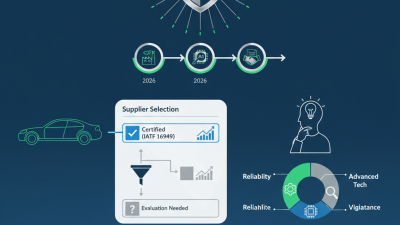
China’s automotive supply chain includes thousands of capable manufacturers, but certification alone does not tell the complete story. This guide introduces ten leading Chinese suppliers with IATF 16949 certification and examines the evidence behind their automotive quality systems. The selection considers certification validity, production experience, export capability, process control, and customer support.
A certified supplier should manage more than paperwork. On a factory visit, buyers may review material traceability, inspection records, calibration labels, control plans, and PPAP files. They may also observe how operators handle nonconforming parts beside an active production line. These details reveal whether quality procedures are practiced daily or stored only for audits. Manufacturing scope also matters, because a certificate may cover specific sites, processes, or product categories.
This overview is designed for purchasing teams, engineers, and international buyers comparing potential partners in China. It does not treat certification as a guarantee of perfect performance. Even experienced suppliers can face delivery pressure, engineering changes, or inconsistent raw materials. That reality deserves attention.
The ranking reflects publicly available information and practical supplier evaluation principles. It should support due diligence, not replace it. Buyers should verify current certificates, audit the relevant facility, confirm capacity, and test sample quality before signing a long-term agreement. Some company information may change faster than published profiles. A careful review remains necessary. The featured suppliers may serve different automotive applications, from stamped components and machined parts to electronic assemblies and precision tooling. Their strengths are not identical, and that is important when matching a supplier to technical, volume, and compliance requirements.
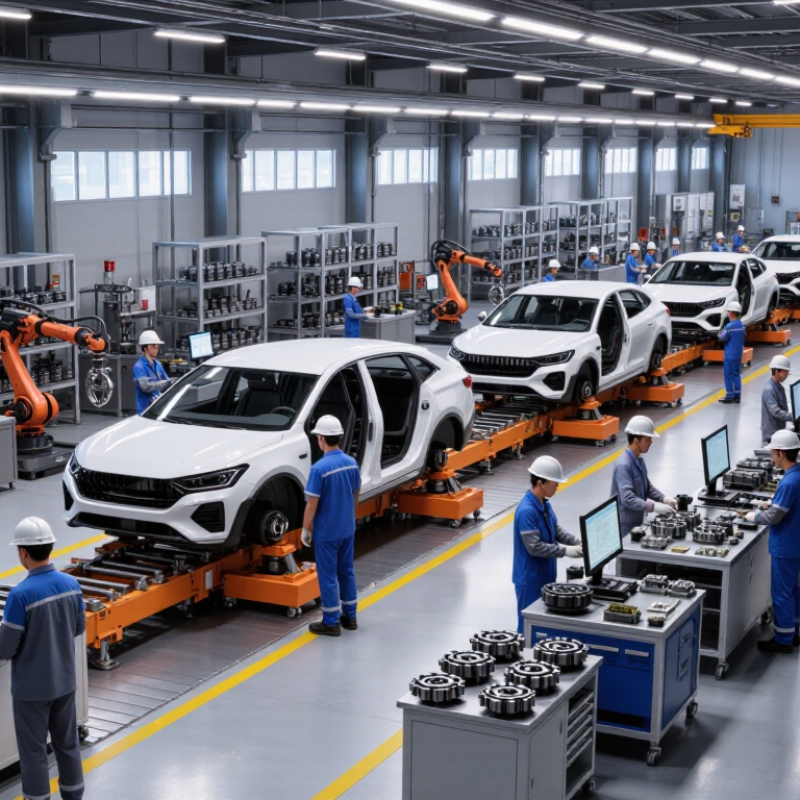
IATF 16949 certification shows that an automotive supplier has built a controlled quality management system around vehicle production. It extends ISO 9001 principles with automotive-specific requirements, including risk management, traceability, process control, and corrective action. For a buyer comparing China’s top 10 certified suppliers, the certificate is an important starting point, not a complete ranking.
In daily operations, certification should appear on the factory floor. Operators may scan material batches before assembly, record torque values, and stop a line when measurements move beyond control limits. Engineers review process capability and investigate repeated defects instead of simply replacing rejected parts. Customer-specific requirements also matter. A supplier must understand delivery targets, documentation rules, and approval procedures before production begins.
Certification is not a magic shield. A certified supplier can still face equipment wear, training gaps, or an incomplete root-cause analysis. That weakness deserves honest review. During a supplier audit, buyers should examine recent nonconformities, internal audit records, calibration labels, and evidence of corrective actions. Speaking with operators can reveal more than a polished presentation. The strongest suppliers treat IATF 16949 as a working discipline, maintained through data, accountability, and repeated improvement rather than as a framed certificate.
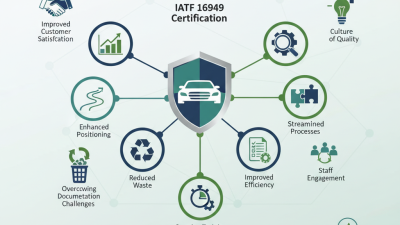
China Top 10 IATF 16949 Certified Suppliers
China’s leading automotive suppliers should be judged beyond certificate status. IATF 16949 certification confirms a controlled quality system, not perfect production. The ISO Survey 2022 reported more than 76,000 valid IATF 16949 certificates worldwide. This scale makes deeper evaluation essential.
Auditors and purchasing teams typically examine process control, traceability, corrective action, and customer-specific requirements. A strong supplier can show lot records within minutes, calibrated gauges on the production floor, and clear evidence of root-cause analysis. Quality data also matters. Review first-pass yield, defect rates, warranty returns, and delivery performance over at least twelve months. Stable figures are more convincing than a single impressive audit result. According to the 2023 Automotive Industry Action Group quality guidance, risk-based thinking and effective problem-solving remain central to automotive quality management. However, public supplier rankings often lack comparable data. That limitation deserves attention.
Tips: Request anonymized audit findings, process capability studies, and recent corrective-action records. Visit the plant during normal production, not only during a prepared tour. Check whether operators understand control plans without reading from a script. Ask how production changes are approved. Small inconsistencies can reveal large system weaknesses.
This neutral evaluation framework reflects the main evidence areas covered by IATF 16949:2016, including customer-specific requirements, risk-based planning, production control, supplier management, and continual improvement. The percentages represent editorial weighting for comparison purposes, not the performance results of any individual supplier.
China’s top ten IATF 16949 certified suppliers show different strengths rather than identical capabilities. The first focuses on precision machining, with in-process gauges beside each CNC cell. The second produces stamped metal parts and controls die wear through hourly checks. The third specializes in molded components, supported by resin traceability and controlled drying records. The fourth supplies wiring assemblies, using barcode scans to verify terminal position. The fifth makes forged parts and tracks heat-treatment curves for every batch.
The sixth supplier serves chassis programs, combining dimensional reports with capability studies. The seventh focuses on electronic modules and maintains electrostatic-control workstations. The eighth produces rubber seals, recording compound lots, cure temperatures, and hardness results. The ninth supports interior components, where visual inspection standards help reduce color and surface variation. The tenth offers integrated assembly, linking purchased parts to finished-unit serial numbers.
Certification alone proves limited value. Real confidence comes from repeated evidence. Each supplier should demonstrate APQP planning, PPAP discipline, FMEA updates, MSA results, and SPC reaction plans. During a plant visit, buyers can review nonconformance records, calibration labels, layered-process audits, and corrective-action closure. Clean floors help, but process behavior matters more. Some suppliers may present excellent documents while struggling with urgent engineering changes. Others may have modest facilities but stronger shop-floor ownership. Public profiles cannot replace a technical audit. Supplier ranking should reflect product risk, delivery history, change-control performance, and transparent communication. Mistakes still happen. The stronger partner learns visibly from them.
China’s leading IATF 16949 certified suppliers serve automotive programs with stamped metal parts, precision-machined components, molded plastics, wiring assemblies, and electronic modules. Their capabilities may include tool design, automated inspection, process monitoring, and production traceability. Buyers should confirm each supplier’s current certification scope; certification alone does not prove that every factory or product line is covered.
A capable supplier can explain how it controls variation, handles engineering changes, and responds when a batch fails inspection. Ask for sample inspection records, material traceability examples, and details about production capacity. Small details matter. For instance, a clear lot code on a component box can help teams trace parts quickly. These suppliers commonly support passenger vehicles, commercial vehicles, electric vehicle systems, and aftermarket production. Some also serve adjacent industrial sectors, though their automotive processes and approvals may differ. Not always obvious. Compare suppliers using the same drawing, quality requirements, delivery assumptions, and audit questions. A polished presentation is useful, but practical evidence from the production floor is more convincing. Even a strong supplier may have gaps, so identify them early and agree on corrective actions.
This is an industry-category overview, not a verified ranking or list of specific suppliers. IATF 16949 certification applies to defined manufacturing sites and scopes; confirm each supplier’s current certificate, site, and product scope before sourcing.
| No. | Supplier Category | Key Products | Typical Capabilities | Industries Served | Common Sourcing Considerations |
|---|---|---|---|---|---|
| 1 | Automotive electronics manufacturers | Electronic control units, sensors, wiring assemblies, power-distribution components | PCB assembly, electronic testing, traceability, change control, environmental and reliability testing | Passenger vehicles, commercial vehicles, electric vehicles | Check software and hardware validation requirements, component traceability, and the certified site’s product scope. |
| 2 | Precision metal stamping suppliers | Brackets, terminals, clips, shields, stamped structural parts | Progressive-die stamping, tool design, dimensional inspection, deburring, surface-treatment coordination | Automotive body, chassis, electrical systems, appliances | Review material specifications, die ownership and maintenance, production capacity, and measurement plans. |
| 3 | Plastic injection-molding suppliers | Interior trim, housings, connectors, ducts, clips and retainers | Injection molding, mold trials, resin control, visual inspection, assembly and secondary operations | Automotive interiors, electrical systems, mobility equipment | Confirm resin grades, color and appearance standards, mold maintenance arrangements, and process validation records. |
| 4 | Powertrain component suppliers | Machined housings, shafts, gears, brackets, fluid-system parts | CNC machining, heat-treatment coordination, dimensional control, leak or functional testing | Internal-combustion, hybrid, and electric powertrain applications | Specify material condition, critical characteristics, cleanliness requirements, and applicable testing criteria. |
| 5 | Automotive fastener manufacturers | Bolts, nuts, screws, studs, rivets and threaded inserts | Cold heading, thread rolling, heat treatment, coating coordination, torque and tensile testing | Vehicle assembly, chassis, body, powertrain and industrial equipment | Verify strength class, coating, corrosion-test requirements, lot traceability, and approval documentation. |
| 6 | Rubber and sealing-product suppliers | Gaskets, O-rings, molded seals, hoses, vibration-isolation components | Rubber compounding, molding or extrusion, cure control, material testing, leak and dimensional checks | Automotive fluid systems, HVAC, engines, batteries and industrial machinery | Confirm compound specifications, operating-temperature range, fluid compatibility, and aging-test requirements. |
| 7 | Wire harness and cable-assembly suppliers | Vehicle wiring harnesses, cable assemblies, connectors and protective coverings | Wire cutting, crimping, routing, continuity testing, assembly inspection and serialization | Passenger vehicles, commercial vehicles, agricultural and construction machinery | Assess connector sourcing, crimp validation, electrical test coverage, configuration control, and delivery flexibility. |
| 8 | Automotive bearing and rotating-part suppliers | Bearings, bearing housings, rollers, hubs and related precision components | Grinding, heat treatment, dimensional measurement, surface inspection, noise or rotation testing | Chassis, driveline, electric motors and industrial machinery | Review cleanliness controls, material and heat-treatment records, life-test requirements, and critical tolerances. |
| 9 | Thermal-management component suppliers | Heat exchangers, cooling plates, pipes, fittings and HVAC components | Metal forming, brazing or joining, pressure and leak testing, dimensional inspection | Vehicle HVAC, engine cooling, battery and electric-drive systems | Define pressure, leak-rate, corrosion, thermal-cycle, and cleanliness requirements for the application. |
| 10 | Automotive interior and seat-component suppliers | Seat frames, mechanisms, trim components, foam parts and molded interior assemblies | Metal forming, welding, molding, trim assembly, fit-and-finish inspection and functional testing | Passenger vehicles, commercial vehicles and specialty vehicles | Check applicable safety and durability requirements, material restrictions, appearance standards, and assembly validation. |
Selecting among China’s top IATF 16949 certified suppliers requires more than checking a certificate. IATF 16949 confirms a quality-management framework for automotive production, not perfect delivery or zero defects. Verify the certificate number, production site, scope, and expiration date through the official certification database. Then request recent data: customer complaint rates, warranty returns, process capability, and on-time delivery. Keep evidence specific. “High quality” is not evidence.
Cost pressure remains significant across the automotive supply chain, while resilience and technology investment are major priorities in Deloitte’s 2024 Global Automotive Supplier Study. China also scored 3.7 out of 5 in the World Bank’s 2023 Logistics Performance Index, showing strong logistics capability but not eliminating regional differences. Compare suppliers by factory location, port access, export experience, and backup capacity. Ask for a live production tour, not only polished documents. Inspect incoming-material controls, traceability labels, calibration records, and nonconforming-product areas. Small details matter.
A useful shortlist should include at least three suppliers. Run the same technical questionnaire for each one. Check whether their process-control plans match your drawings and tolerance requirements. Request a sample PPAP package before signing. Some suppliers may resist sharing meaningful records; that hesitation deserves attention. Price matters, but an unusually low quotation can hide weaker validation, tooling support, or change control. IATF certification reduces risk. It does not remove the need for independent audits, trial orders, and clear corrective-action deadlines.